For travellers planning a mainland Greece road trip, visiting the Delphi Archaeological Site offers far more than another collection of crumbling stones. This UNESCO World Heritage Site was once considered the very centre of the world by the ancient Greeks — the sacred place where heaven and earth met.
Pilgrims travelled here from across the known world seeking guidance from the famous Oracle of Delphi. Today, wandering the hillsides of this mystical mountain sanctuary remains one of the most memorable experiences in Greece.
Disclosure: This post contains affiliate links. If you buy something from one of our affiliates, we receive a small commission at no extra charge to you. Thanks for helping to keep our blog up and running!
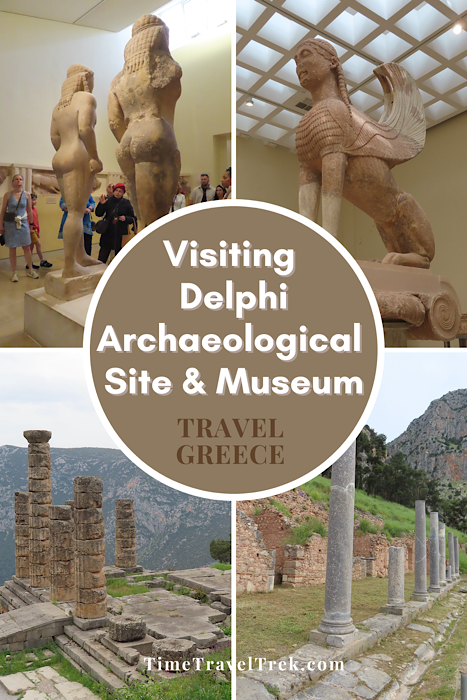
Table of Contents
Why Is the Delphi Archaeological Site Such a Draw?
Some archaeological sites impress because they are massive. Others because they are beautiful. And then there is Delphi — a place that is not only grand in scale and set in a stunning location, but it also resonates deep in the soul.
We didn’t know any of this when Delphi found its way onto our itinerary. Like many travellers, I added it largely because it was a UNESCO World Heritage Site and conveniently fit into the circular mainland route we had planned.
Perched on the slopes of Mount Parnassus and overlooking the shimmering Gulf of Corinth, Delphi is a unique destination – it is a place where landscape and legend merge completely.
Ancient Greeks believed Delphi was the omphalos — the navel of the earth. According to mythology, Zeus released two eagles from opposite ends of the world, and they met here on the slopes of Mount Parnassus. The sacred stone marking that meeting point symbolized Delphi’s role as the spiritual centre of the ancient world.
It was also one of the most influential religious sanctuaries in ancient Greece. Kings, generals, city-states, and ordinary citizens journeyed here seeking advice from the Oracle of Delphi, delivered through the priestess Pythia in the Temple of Apollo. Decisions about wars, colonies, alliances, and political strategies were often made only after consulting the oracle.
Delphi became a gathering place, and its pull continues today.
All You Need to Know About Visiting the Delphi Archaeological Site
Distance from Athens: 185 km
Best Season: April and May (wildflower season)
Peak visitation: Summer, midday. Plan to arrive early morning (opening) or late afternoon to beat the rush
Hours: Open year-round (except national holidays) from 8:30 am to 4:00 pm
Time: 3-4 hours
Tickets: You can purchase tickets at the entrance booth or online. Combined entry includes both the archaeological site and the museum.
Tips: Wear good walking shoes and be prepared for stairs, gravel and slippery marble. Carry water. Use the Hellenic Heritage app to help interpret the site if not on a guided tour.
Planning Your Visit to Delphi
Delphi sits roughly 185 kilometres (115 miles) northwest of Athens, making it one of the most popular day trips from the capital. However, while a day trip is certainly possible, staying overnight allows for a far richer experience.
Part of Delphi’s magic emerges early in the morning and late in the day, when cooler temperatures and fewer visitors allow the sanctuary’s atmosphere to truly settle in. Spending a night in town also gives you time to visit both the archaeological site and museum without rushing.
For travellers following a mainland Greece road trip route, Delphi fits naturally between Athens and destinations farther north such as Meteora.
Ready, Set, Explore!
We walked from our hotel in town – happy to be able to leave the car and avoid the parking nightmare we’d witnessed driving through the day before (the only parking is along the roadway, and it fills up quickly).
Buying our combined entry – archaeological site and museum – tickets, we headed along to the entrance gate. Up, up, up – there is nowhere to go but up as begin climbing the slope.
The main archaeological site centres around the Sacred Way, the steep ceremonial path winding upward through the sanctuary. As you climb, ruins of treasuries, monuments, and votive offerings line the route.
Wealthy city-states built these elaborate structures to honour Apollo and display their own power and prosperity. Delphi was not controlled by any single Greek city-state, making it a truly pan-Hellenic sanctuary where rival powers competed symbolically through architecture and offerings. Among the most notable structures are the Athenian Treasury, Temple of Apollo and the theatre.
After this, the trail becomes narrower and a little less groomed. Judas trees bloom in profusion, chaffinches flitter from ground to bush, and greenfinches call from towering pines.
Remains from the Mycenaean culture have been found dating from 1500-1100 BC, but the sanctuary and oracle religion – remains of which are interpreted today – began to develop in the 8th century.
The pull of the past is strong, and we keep going until we reach the top. It’s quiet except for the call of birds. A watchful guard nods from her booth. We have the stadium to ourselves for a few minutes. The magic of the moment isn’t lost on us. It’s easy to imagine the roar of the crowds as the athletes readied themselves in the starting stones.
Athletic competitions were held here every four years. It was second only to the Olympics in prestige. The Pythian Games celebrated not only athletic ability but also music, poetry, and performance.
Down to the Temple of Apollo
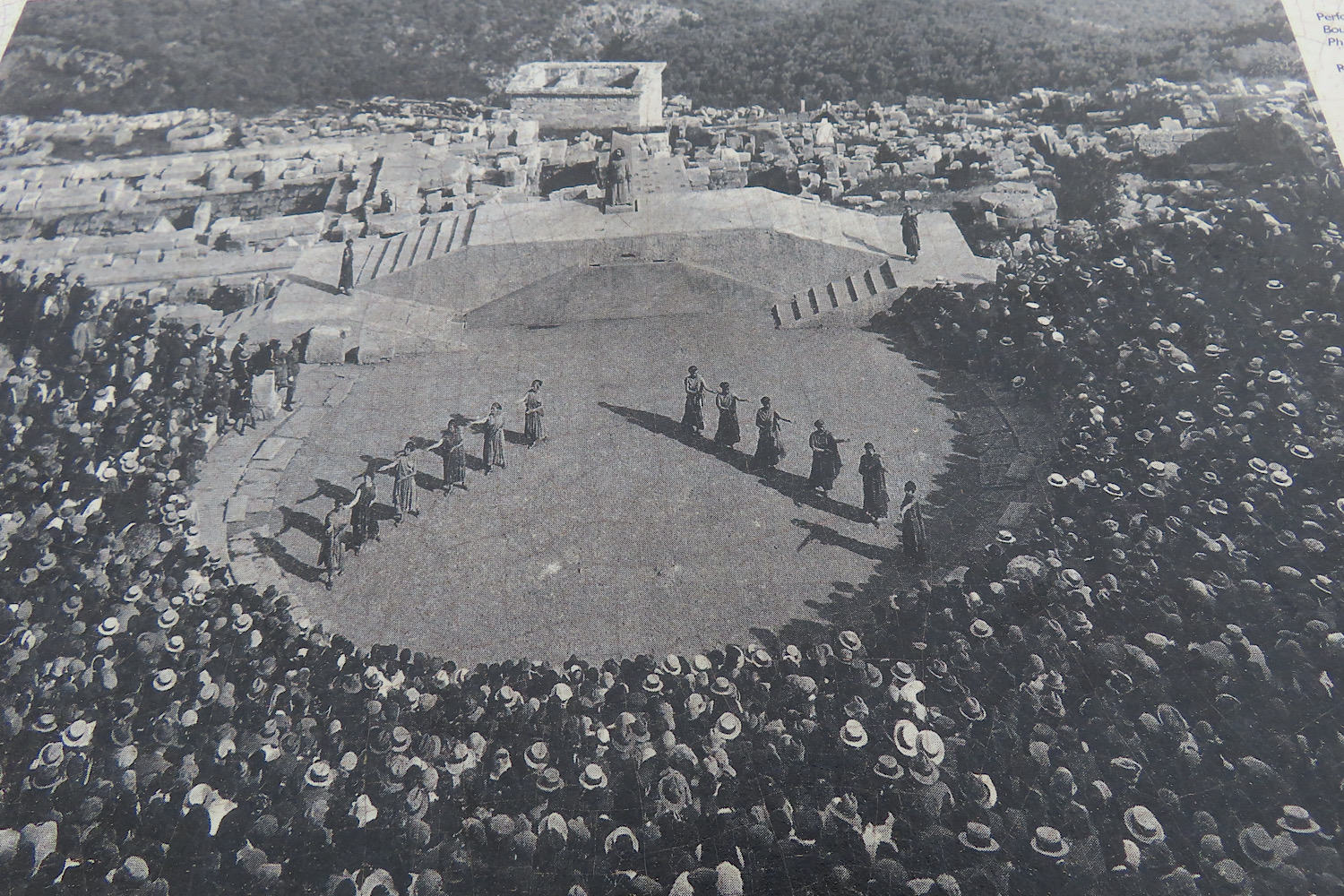
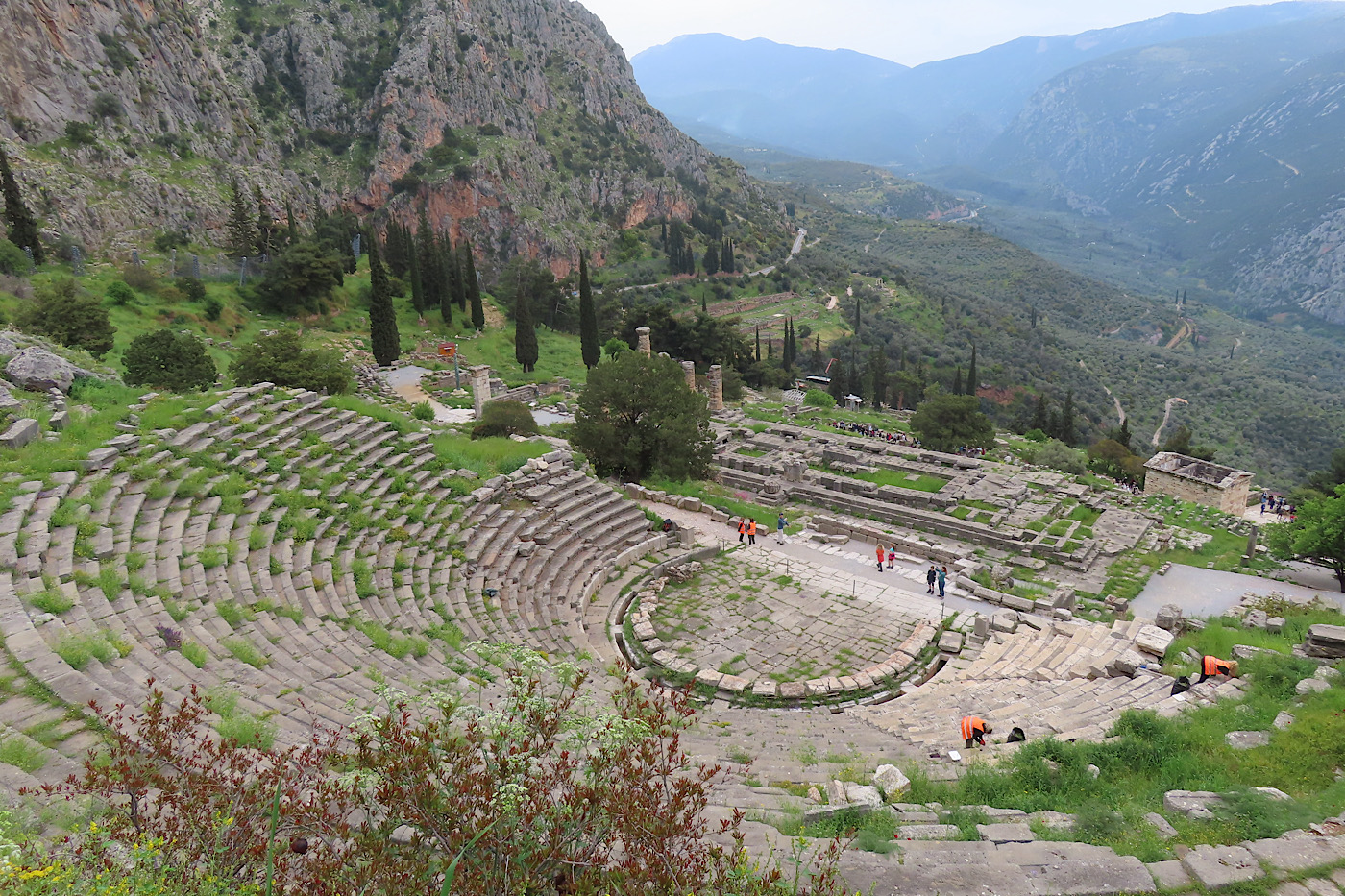
The theatre – where musical and dramatic performances took place during the Pythian Games – sits perched above the temple. Overlooking the valley below, it becomes easy to understand why ancient Greeks viewed this site as a sacred meeting point between human and divine worlds.
The ruins cling dramatically to the southern slopes of Mount Parnassus beneath the imposing Phaidriades (“Shining”) Rocks. Large cable nets are strung across the base of the cliffs to protect the ruins – and its visitors – from rockfall. Far below, endless olive groves spread toward the Gulf of Corinth, creating one of the most spectacular natural backdrops in Greece.
Taking a path to one side of the theatre, we spy the remains of an aqueduct. The sounds of music and water and birds must have driven up the energy in this special place.
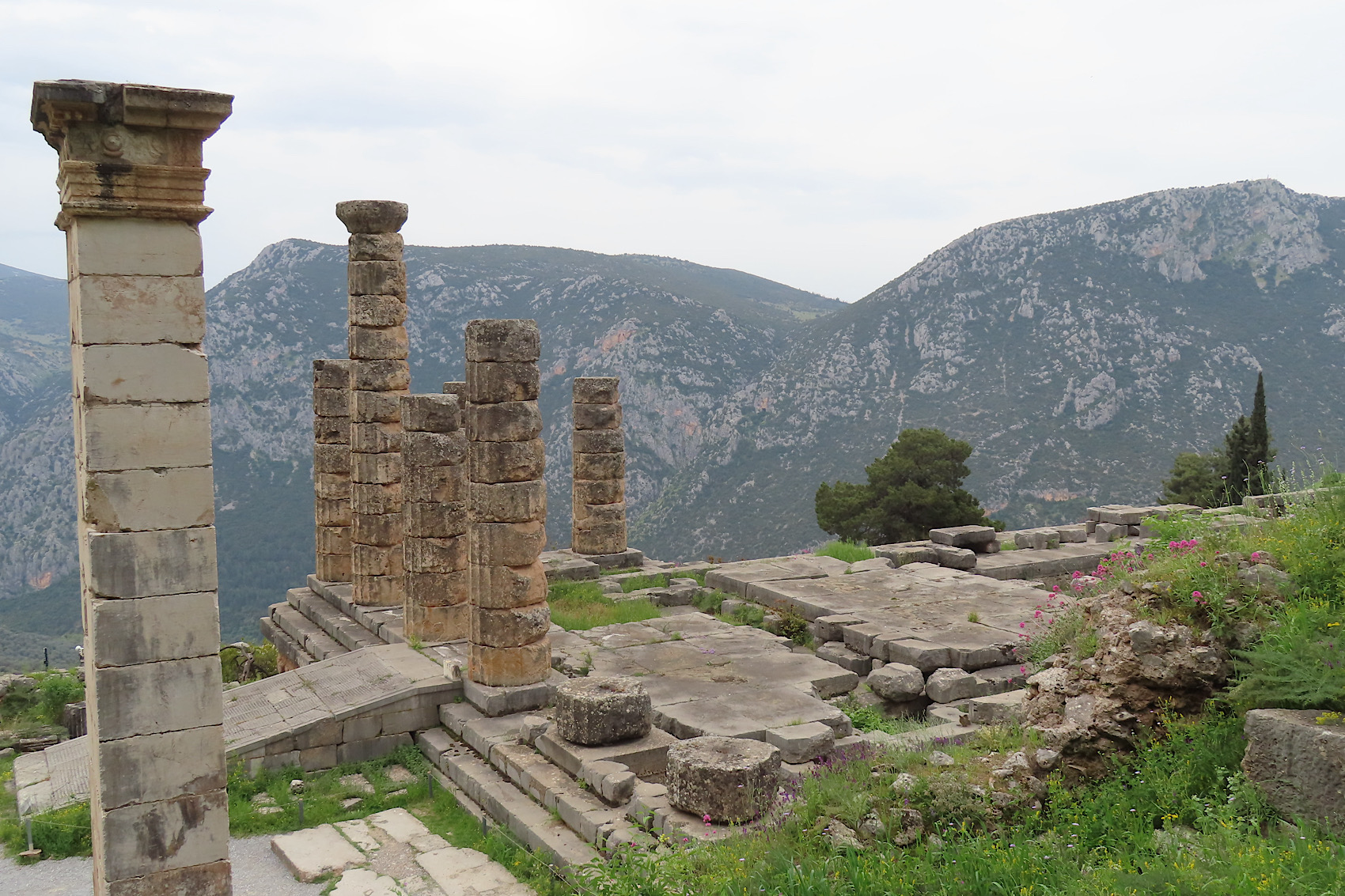
Reaching the Temple of Apollo – the spiritual core of ancient Delphi – is almost anticlimactic. Yes, it’s the place where Pythia delivered Apollo’s prophecies. It was here that generations of leaders sought guidance before wars, political decisions, and major undertakings but today it’s all about the setting.
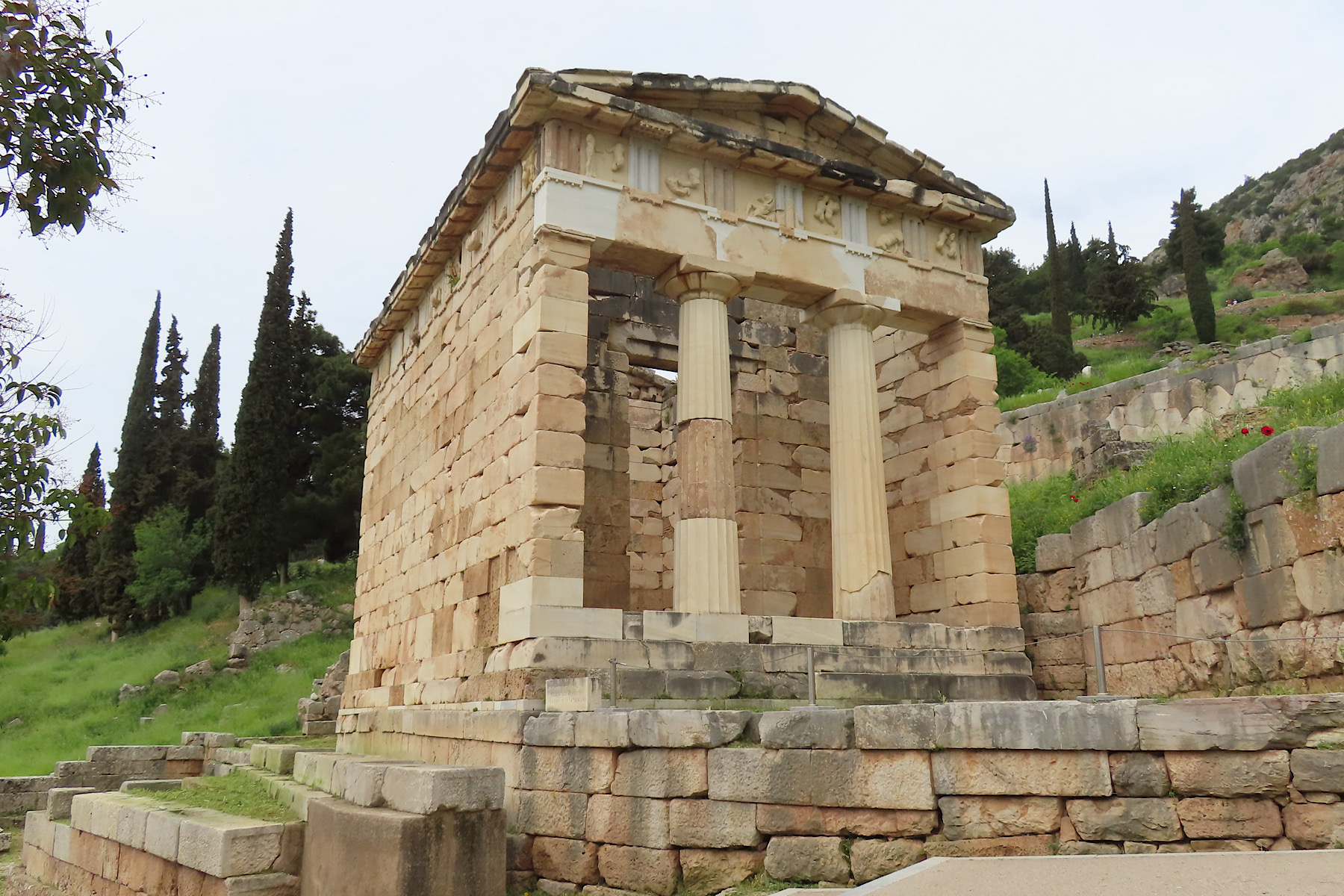
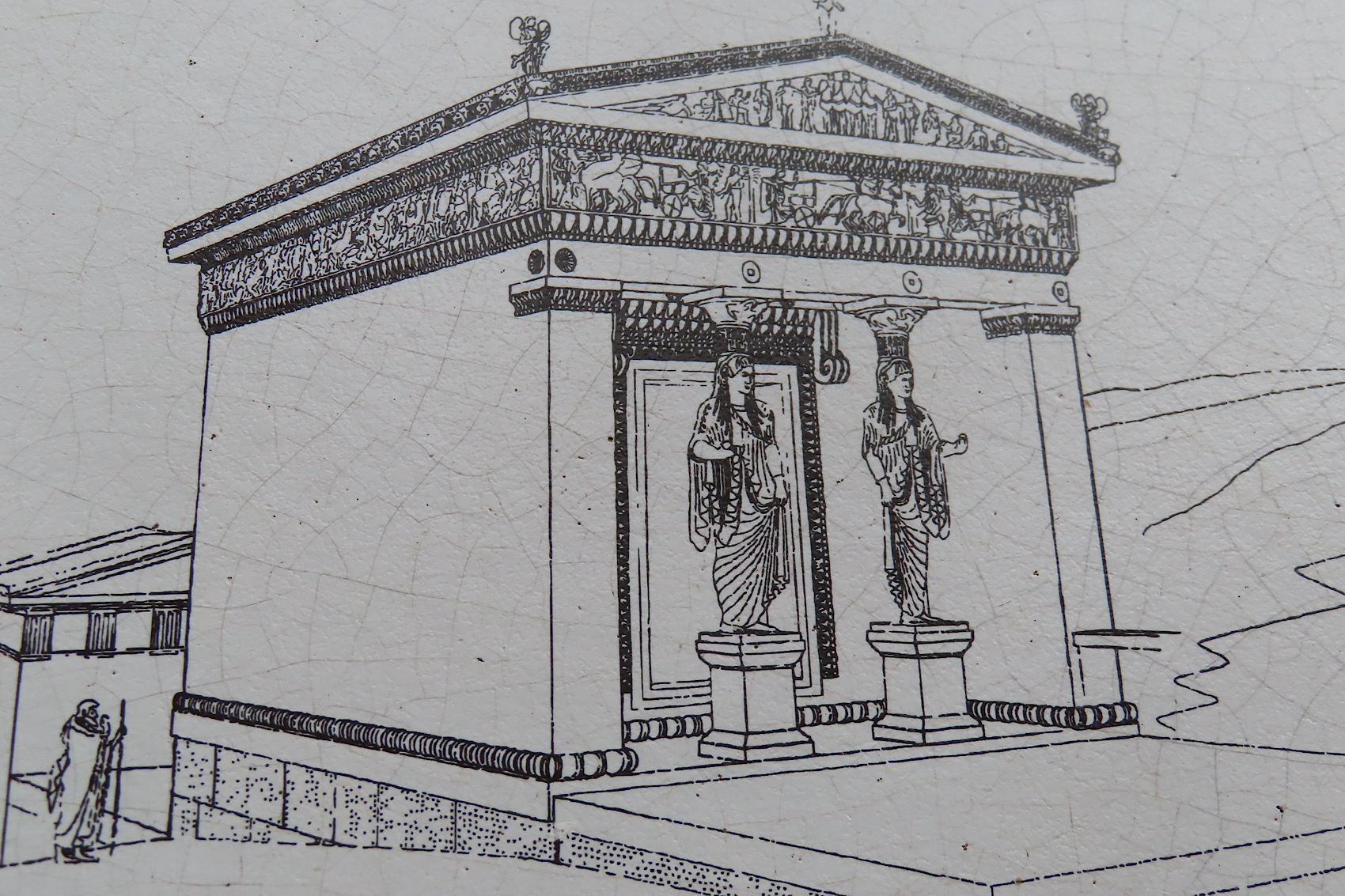
We could gaze out for hours… but there’s so much more to see. Below the temple is the wall of inscriptions and then the reconstructed Athenian treasury.
Even though its treasures are long gone and the stone slabs are weathered and faded with time, the treasury still garners oohs and aahs and countless photos from the crowds working their way uphill as we go down.
Side Trip
Leaving the main sanctuary, we walked over to the Kastalian Spring – where pilgrims once purified themselves before consulting the oracle – and the Sanctuary of Athena Pronaia.
Both were closed for construction during our visit, but we were able to catch a glimpse of the Tholos. This circular ruin is one of Delphi’s most iconic structures. You can read more about it in the museum section of this post.
Finding the Treasures… inside the Delphi Archaeological Museum
There are people that are not into museums… that’s not us. After the archaeological site, we dove into the museum.
It’s here, inside this repository that the beauty of the past comes to life. Here, marble glows, bronze and gold gleam, and colours pop on carved stone. This is where the treasures show the richness of what once existed on the slopes of Mount Parnassus.
The museum’s galleries follow the history of Delphi from its prehistoric beginnings through the height of the sanctuary and into the Roman period.
Golden Treasures
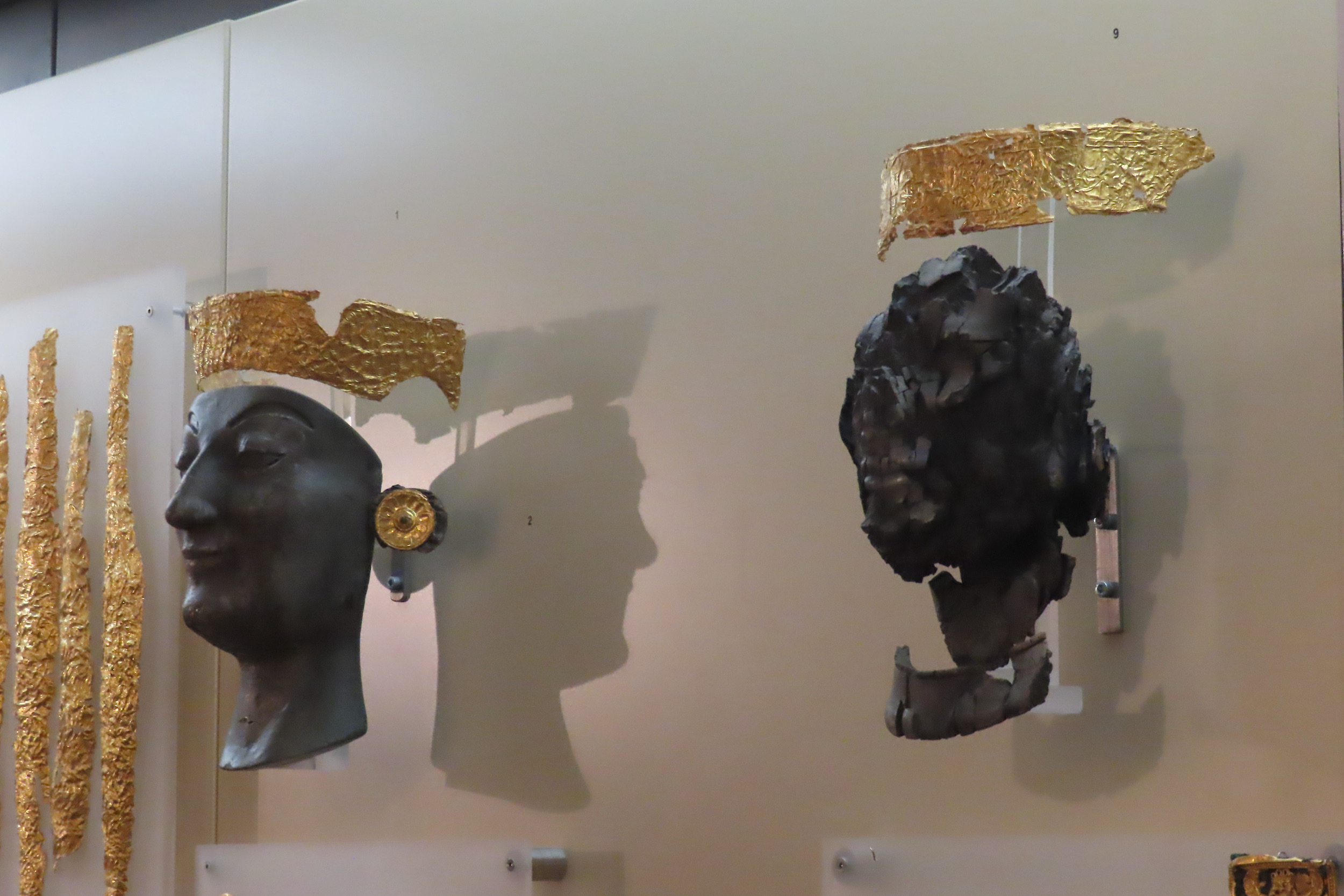
This gallery holds a treasure trove uncovered during an archaeological dig in 1939. Buried beneath the Sacred Way were two pits filled with these precious artifacts – dating between the 8th and 5th century BC.
Among these were three chryselephantine – made from a combination of gold and ivory – sculptures representing Apollo, his sister, Artemis, and mother, Leto.
In the same gallery, don’t miss the life-size silver bull statue – made from silver sheets fastened on a wooden core.
Treasury of the Siphians
The Treasury of the Siphians is a striking example of the wealth and power displayed at Delphi during the 6th century BC.
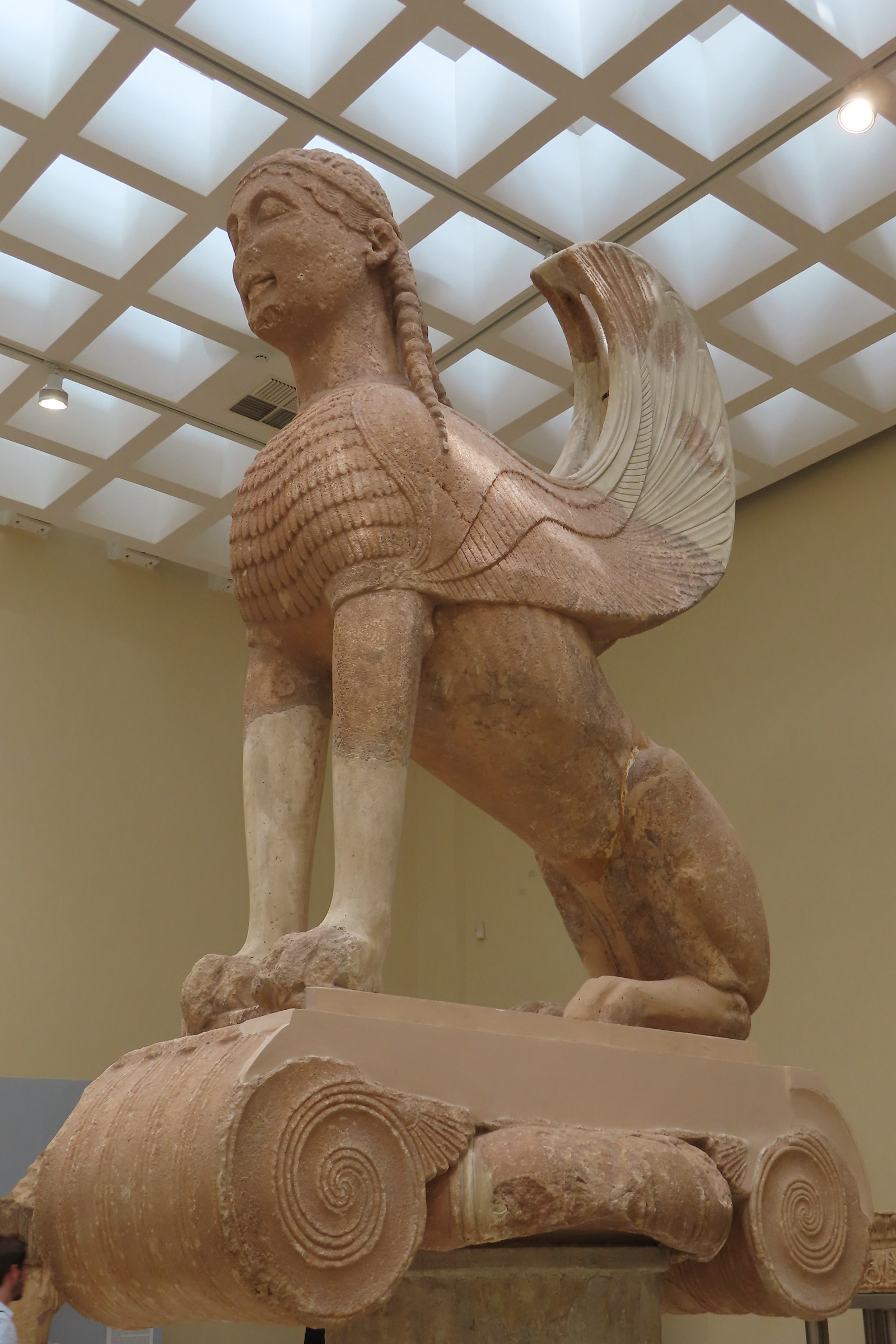
Carved images of sphinxes and elaborate mythological scenes found in metopes (square panels found in the frieze sections of classical Greek temples) are on display in this gallery.
The Tholos
Enjoy architectural sculptures from the Tholos of Delphi. Partially reconstructed, this circular building once dominated the sanctuary of Athena Pronaia. Originally constructed between 380 and 370 BC, it featured 20 Doric (simple, sturdy and unadorned) columns along the outside and 10-13 Corinthian (slender and highly decorative) half-columns in the interior.
The Charioteer
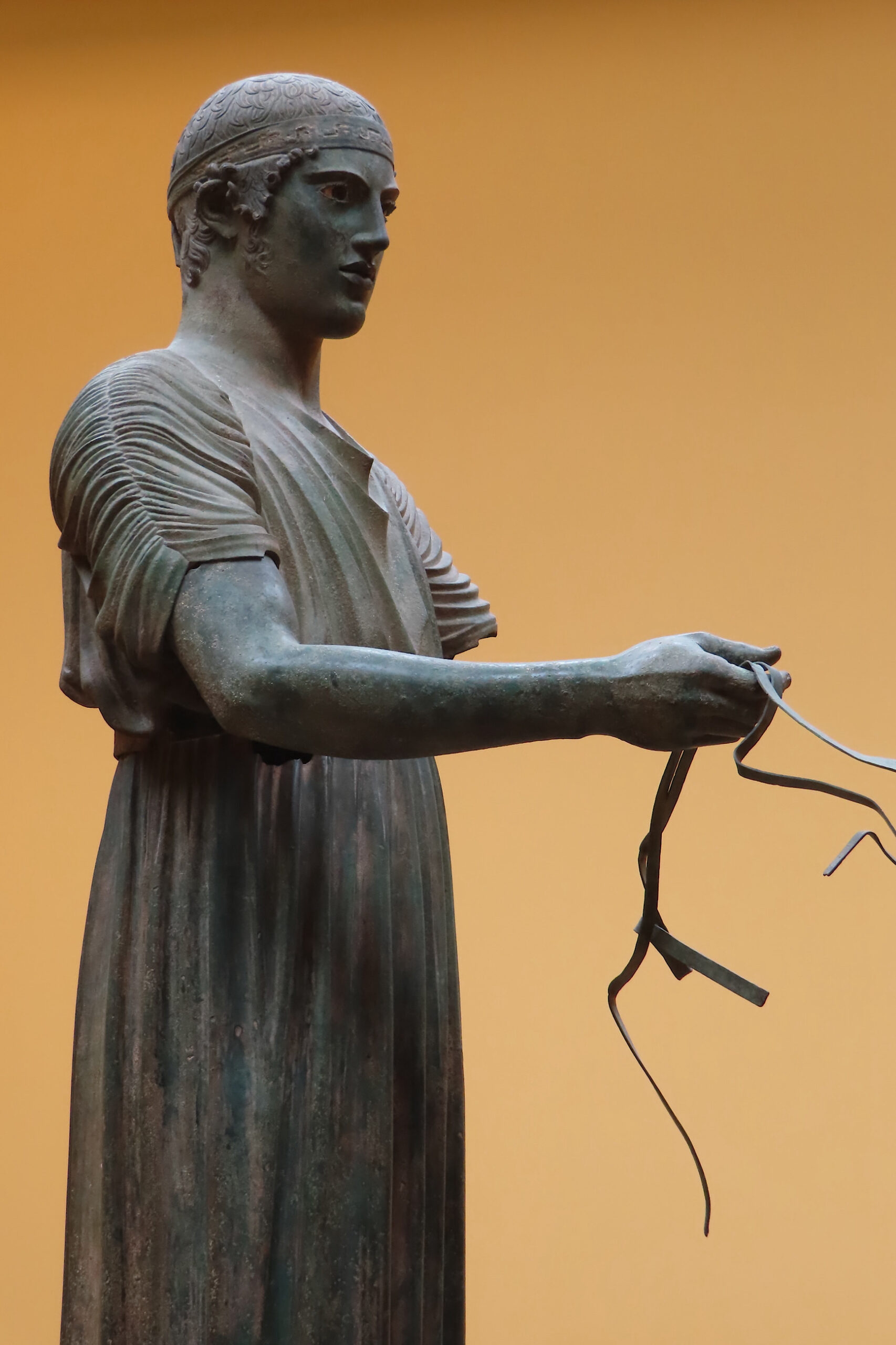
You can still see the location on the hillside where the Charioteer once commemorated a victory in the Pythian Games. Today only portions of the original monument remain, including the famous bronze charioteer whose remarkably lifelike expression has become the enduring symbol of Delphi.
Other Highlights of the Delphi Museum
As you move through the museum, the story of Delphi unfolds through centuries of offerings, sculptures, and architectural fragments. Some of the most impressive pieces come from the Temple of Apollo itself, where elaborately carved pediments once greeted pilgrims arriving at the sanctuary.
Nearby, statues dedicated by wealthy city-states and rulers reveal the immense prestige of Delphi during its height. These were not simple gifts; they were public displays of wealth, power, and gratitude intended to impress both Apollo and fellow visitors.
Sculptural decorations from the Treasury of the Athenians, built after the Greek victory at Marathon, showcase the artistic skill and confidence of Classical Greece.
In another gallery, a painted kylix (drinking cup) depicting Apollo with his lyre connects visitors to the musical traditions celebrated during the Pythian Games.
Throughout the exhibits, inscriptions, votive offerings, and architectural details bring colour and personality back to what can otherwise seem like weathered stone foundations.
Although Delphi’s political influence eventually faded, generations of rulers continued to invest in the site, ensuring its legacy endured long after the oracle had fallen silent.
By the time you leave the museum, the ruins outside no longer feel like scattered stones—they feel like the remains of a once-vibrant centre of faith, politics, art, and culture.
Can You Visit the Archaeologocial Site and Museum Without a Tour?
Over a million people visit the Sanctuary of Delphi during the year. A majority of these do so with guided tours. The archaeological site is within a day trip from Athens and is on a regular bus tour circuit, but you can easily visit Delphi on your own – as we did.
Best tip? Use the Hellenic Heritage app for insight into the ruins and the site’s history.
Second best tip? Don’t try to follow it in numerical order! The numbered signs on the ground don’t follow any pattern we could figure out. Go with the flow. Find the stop and then search for the text description to match. Work your way from the top down.
Final tip – don’t be distracted by the detailed information. Soak up the grandeur of the place, admire the beauty in the art found in the museum and let your imagination run wild as you explore the past in the present.
Where to Stay in Delphi
We stayed at Hotel Castri for 3 reasons: it fit our budget, had free parking and was within walking distance of the archaeological site. A mini fridge came in handy to store our cooler food and freeze water bottles we used as ice blocks. Although the room was tiny, breakfast included was a boon.
Is Delphi Archaeological Site and Museum Worth Visiting?
Absolutely. If we had to choose between many of Greece’s archaeological sites, Delphi would rank near the top. The combination of mythology, mountain scenery, ancient history and one of the finest museums in the country makes it far more immersive than many ruins that require a lot of imagination.
PIN THIS POST FOR FUTURE REFERENCE!


Leave a Reply