A canoe trip doesn’t need to be perfect to become memorable. Take the Lakeland Canoe Circuit, for example.
Four hours into a 1.6-kilometre portage, after hauling canoes over eight fallen trees, slogging through muddy trail sections, and carrying gear back and forth more times than we cared to count, we rounded a corner and found ourselves sharing the trail with a black bear.
Thankfully, the bear wanted nothing to do with us.
But the encounter perfectly captured our five-day adventure paddling in Alberta: occasionally challenging, wild, sometimes exhausting… and completely unforgettable.
For paddlers looking for a true wilderness experience without leaving Alberta, the Lakeland circuit delivers. Quiet lakes, designated backcountry campsites, excellent fishing, abundant wildlife, and one of the province’s only established canoe circuits combine to create an adventure that feels remote while remaining surprisingly accessible.
Disclosure: This post contains affiliate links. If you buy something from one of our affiliates, we receive a small commission at no extra charge to you. Thanks for helping to keep our blog up and running!
Table of Contents
What Makes the Lakeland Canoe Circuit Unique?
Located about two and a half hours northeast of Edmonton, Lakeland Provincial Park protects a network of boreal lakes, wetlands, forests, and backcountry travel routes.
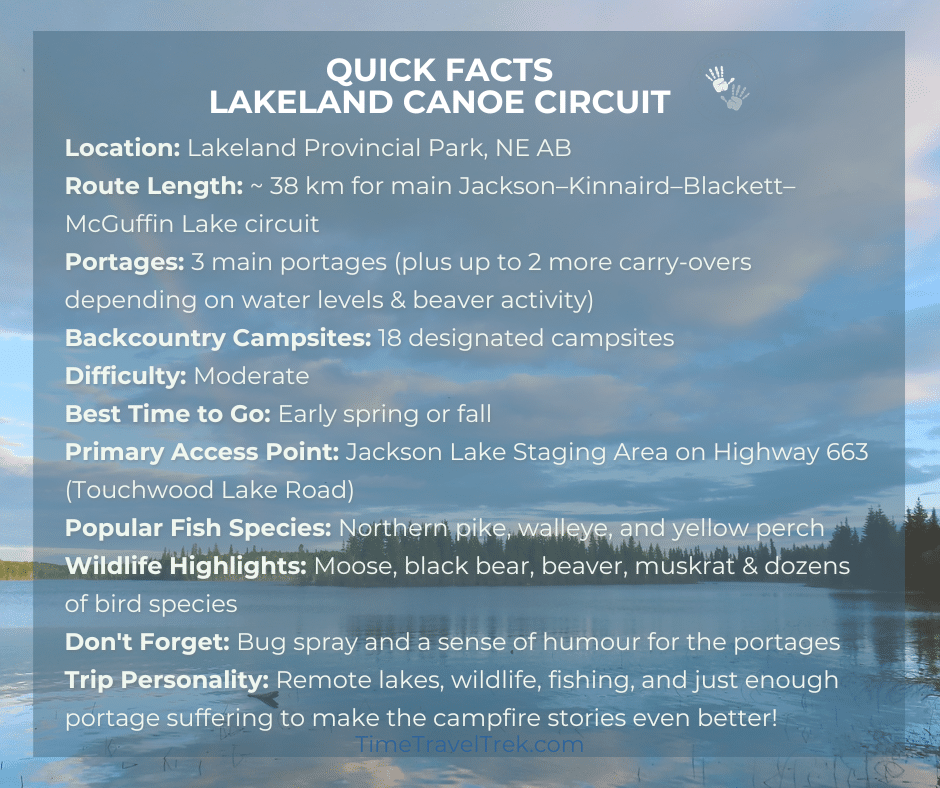
The main canoe circuit links Jackson, Kinnaird, Blackett, and McGuffin Lakes in a 38-kilometre loop. Unlike many Alberta canoe trips that require paddling out and back, this route allows paddlers to travel from lake to lake while camping at designated backcountry sites along the way.
The paddling itself is generally straightforward, but the portages can quickly elevate the challenge—especially after storms, during wet weather, or when carrying several days of camping gear.
For paddlers seeking wildlife, fishing, birding, and a genuine wilderness experience, Lakeland delivers.
First Night on Jackson Lake
The weather forecast wasn’t looking stellar as we drove the final 35 kilometres of gravel road from Lac La Biche to the Jackson Lake Staging Area, but spirits were high.
Mosquitoes immediately welcomed us to Lakeland.
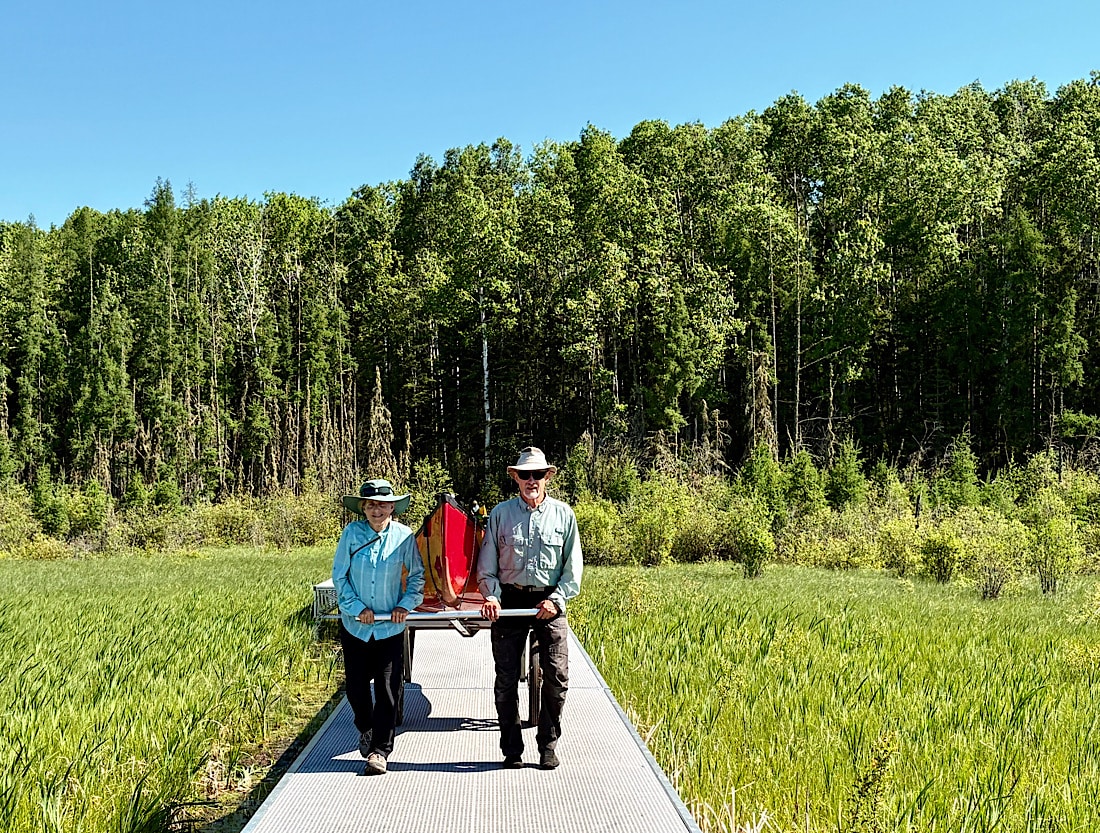
While swatting clouds of the little vampires, we loaded our gear onto bicycle-tire canoe carts and began the 3.2-kilometre portage to Jackson Lake.
Small uphill sections quickly had everyone sweating in the muggy heat. Short downhill grades encouraged an almost comical jogging pace as the carts rolled ahead. A single fallen tree blocked the trail, but with six paddlers it was easy enough to lift loaded canoes over and continue.
An hour later, we reached the lake.
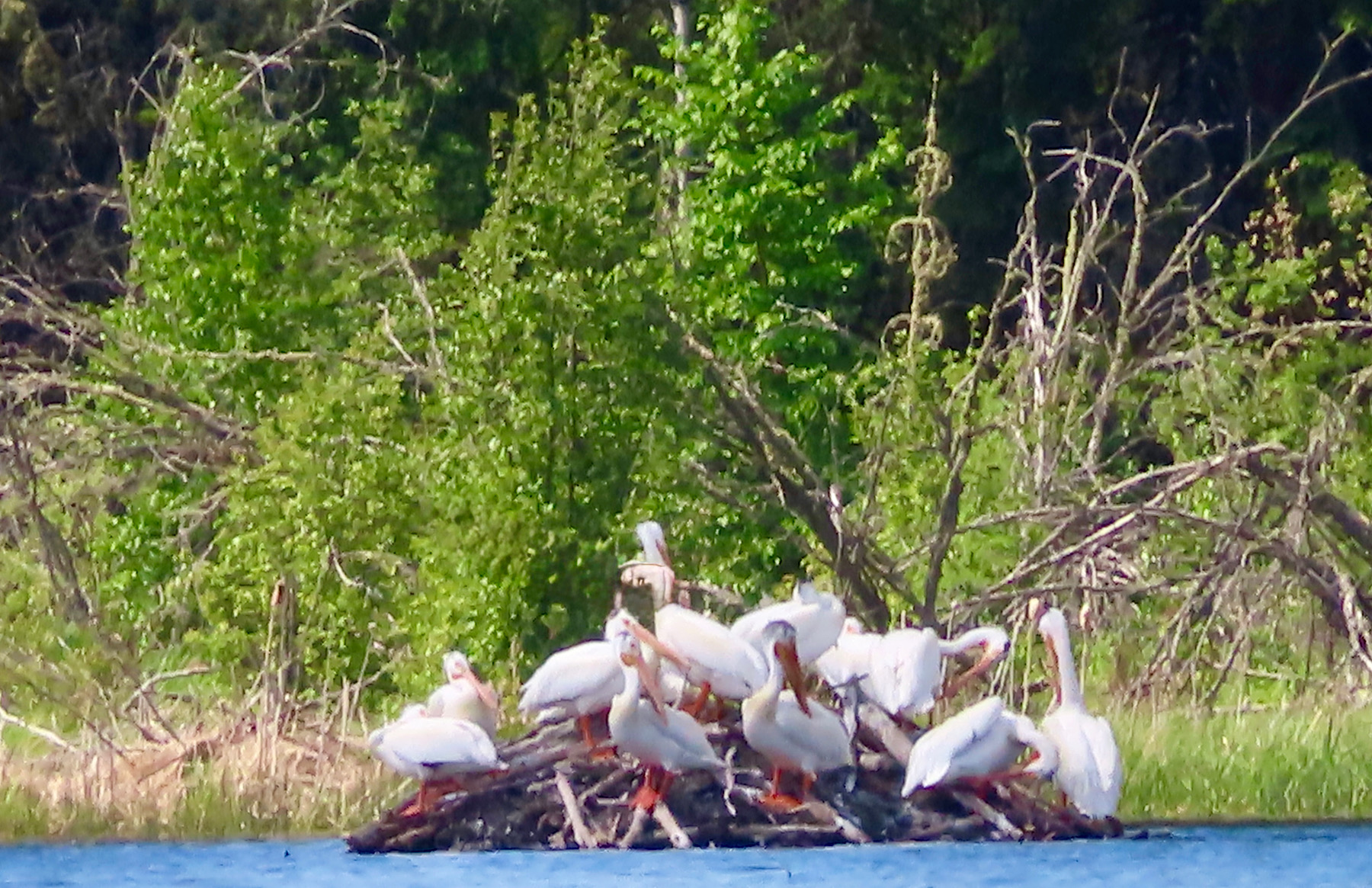
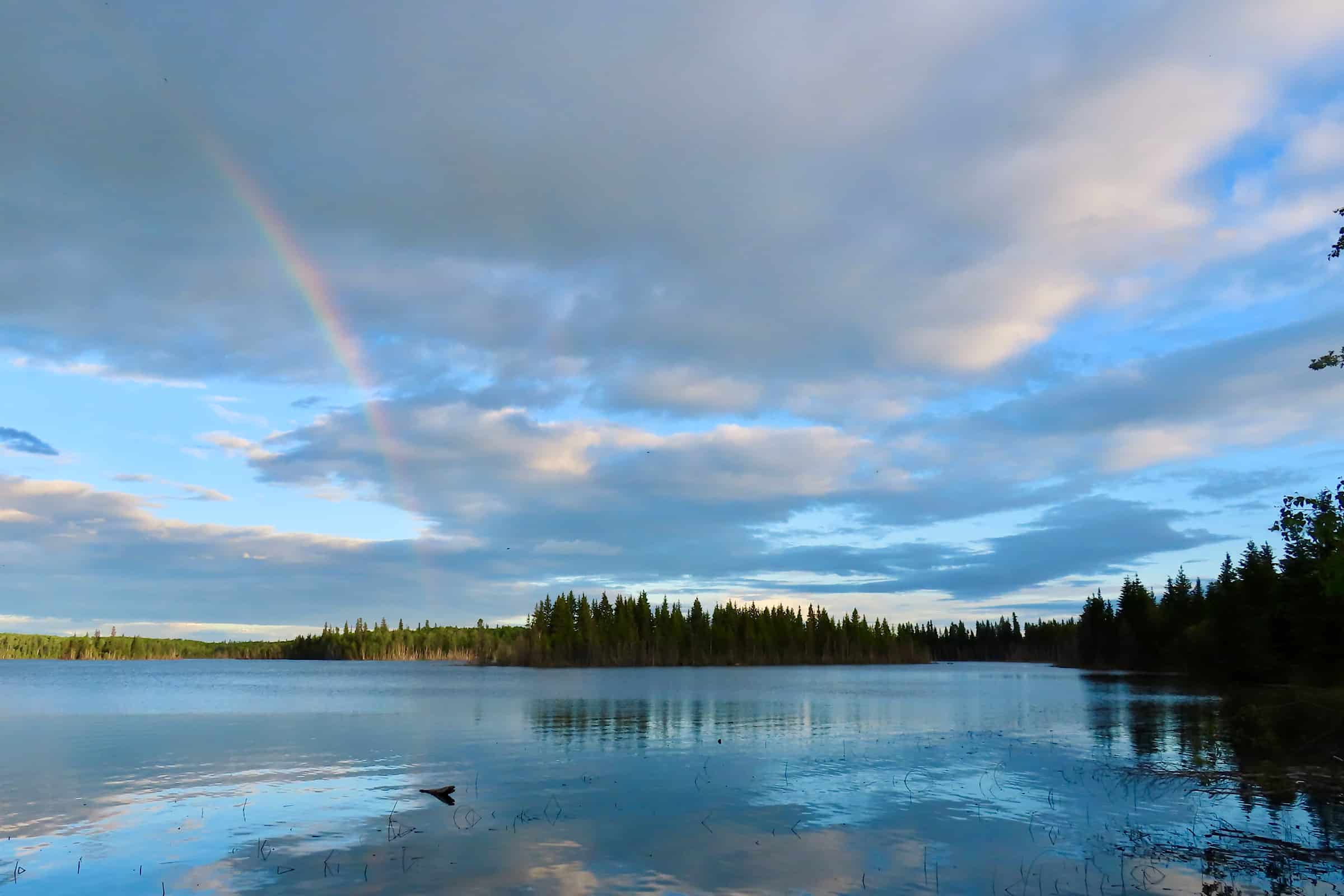
Jackson greeted us with calm water, sunshine, and wildlife. Loons called in the distance while grebes, pelicans, and terns patrolled the shoreline.
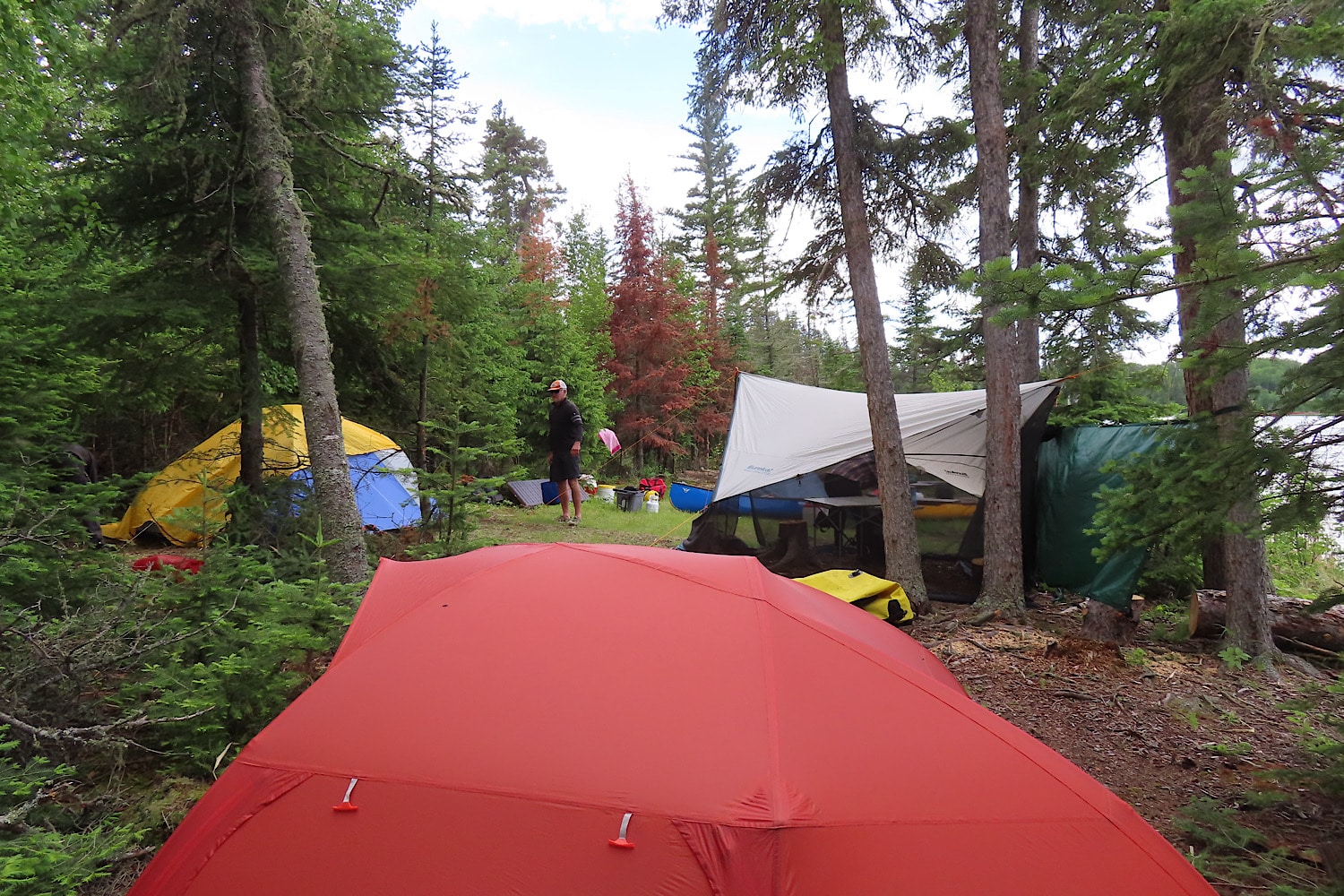
After checking several campsites, we settled on a peninsula site with room for three tents, bear bins, and a composting toilet. Since rain was forecast for the following day, we decided to stay put for two nights.
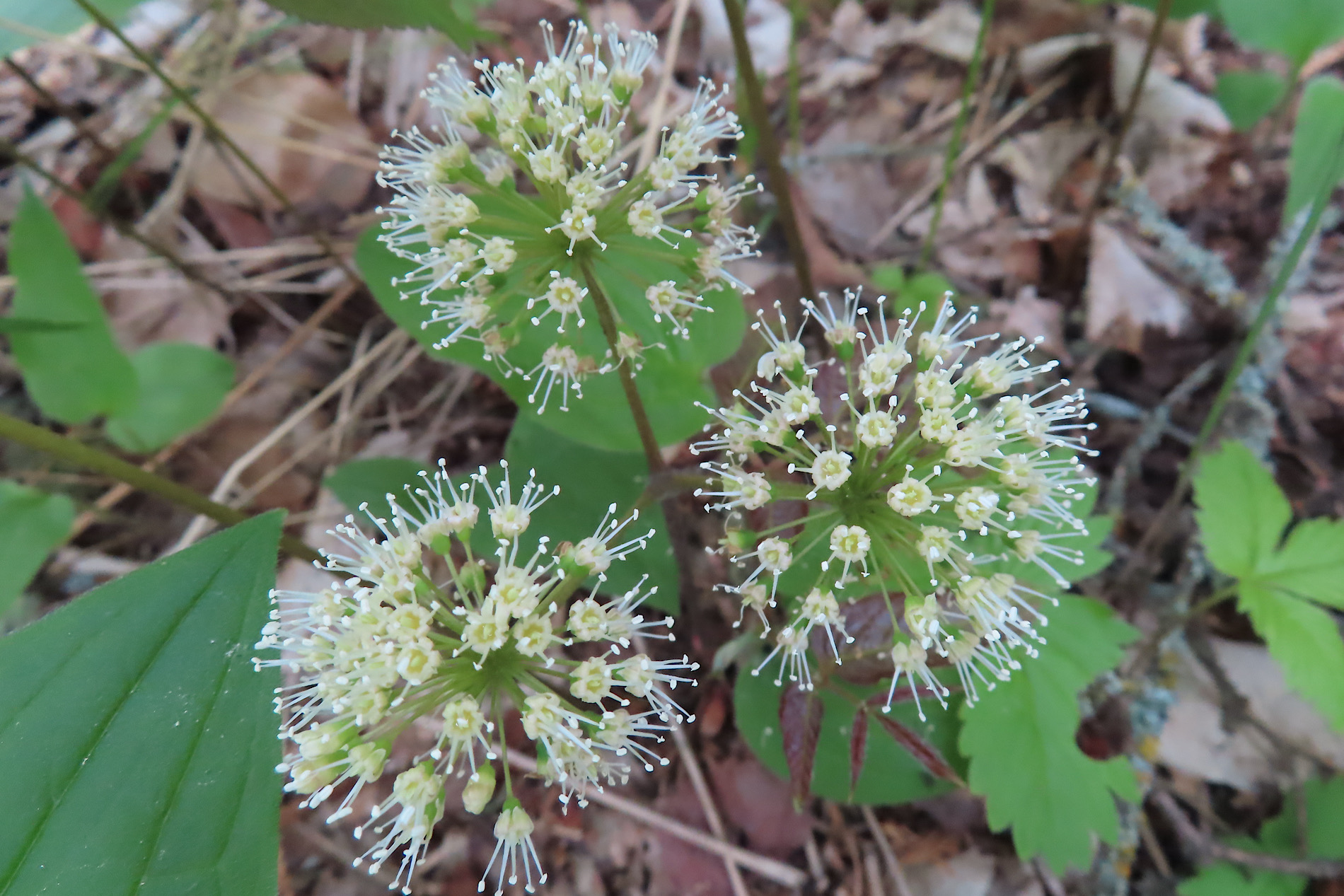
Once camp was established, the anglers headed out in search of fish while the rest of us explored nearby trails, admired spring wildflowers and added birds to our growing checklist.
That evening, gentle rain arrived just as we sat down to chicken cacciatore on pasta. A game of dice and a sip of homemade liqueur provided a fitting end to our first day on the circuit.
Settling Into the Lakeland Rhythm
Every canoe trip develops its own rhythm.
Ours began each morning with birdsong.
Red-eyed vireos, American crows, chipping sparrows, song sparrows, white-throated sparrows, and yellow-rumped warblers created a dawn chorus that echoed through camp. A distant loon completed the soundtrack.
The morning also featured another sound entirely—a low rumble coming from one of the tents.
Not everyone was awake yet.
Heavy rain dominated much of our second day, but brief breaks in the weather allowed us to paddle, birdwatch, fish, and explore.
A pileated woodpecker hammering at a stump provided one memorable sighting before the rain chased us back to camp for an afternoon of reading, cribbage, and catnaps.
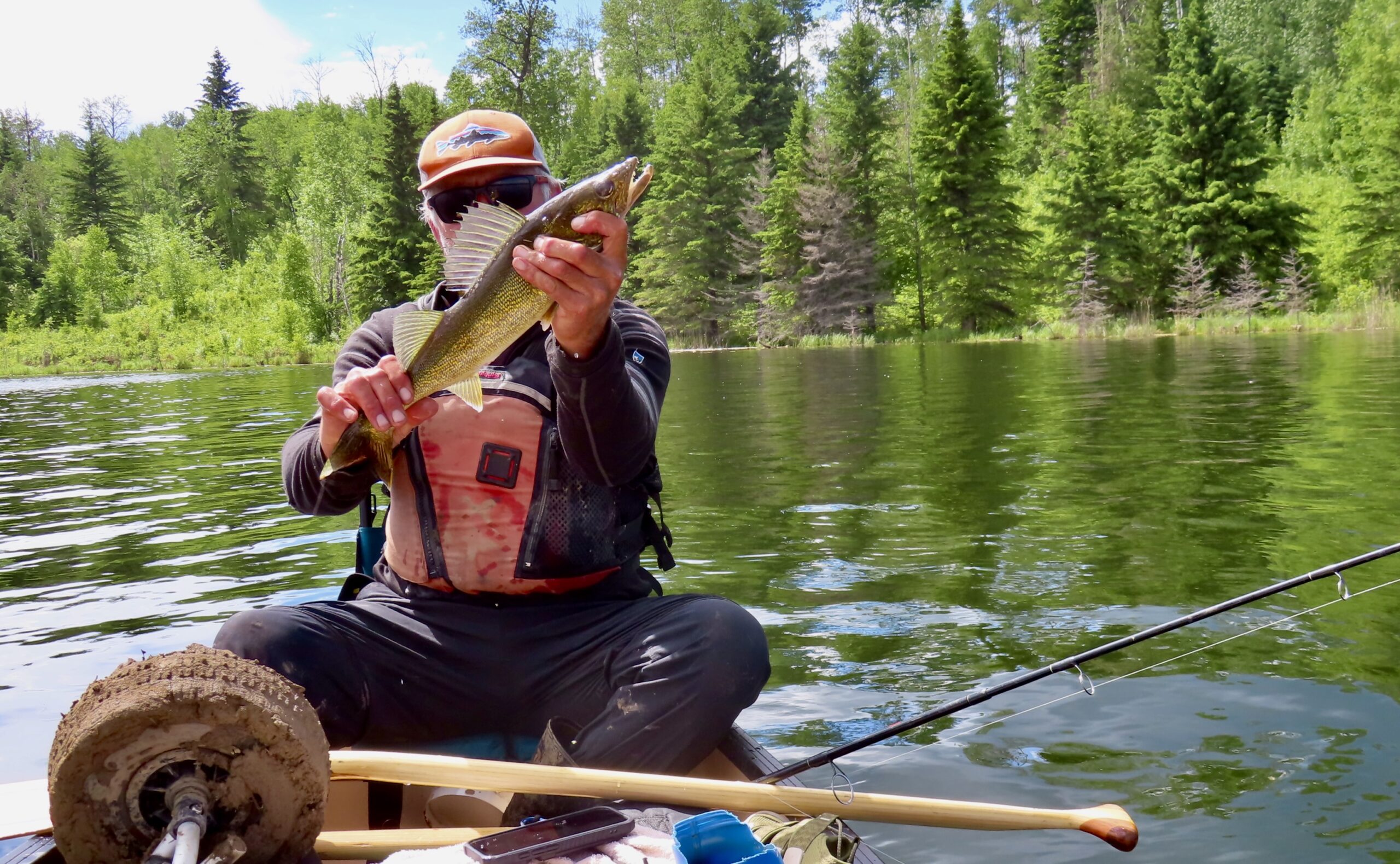
Later, the clouds lifted just enough for an evening fishing session. Fresh walleye became an appetizer before a surprisingly gourmet camp supper of elk sausage jambalaya and strawberry rhubarb pudding cake.
By Day Three, we’d fully settled into our routine.
Coat on. Paddle. Coat off. Fish. Watch wildlife. Set camp. Eat. Sleep. Dry gear. Repeat.
Dip. Dip. Swing.
Strong winds greeted us on Kinnaird Lake, prompting creative use of umbrellas and improvised sails to help push the canoes along.
At the end of the lake, we paddled through a narrow, forested channel into Blackett Lake. Pelicans drifted in large groups while buffleheads and common goldeneye scattered ahead of our boats.
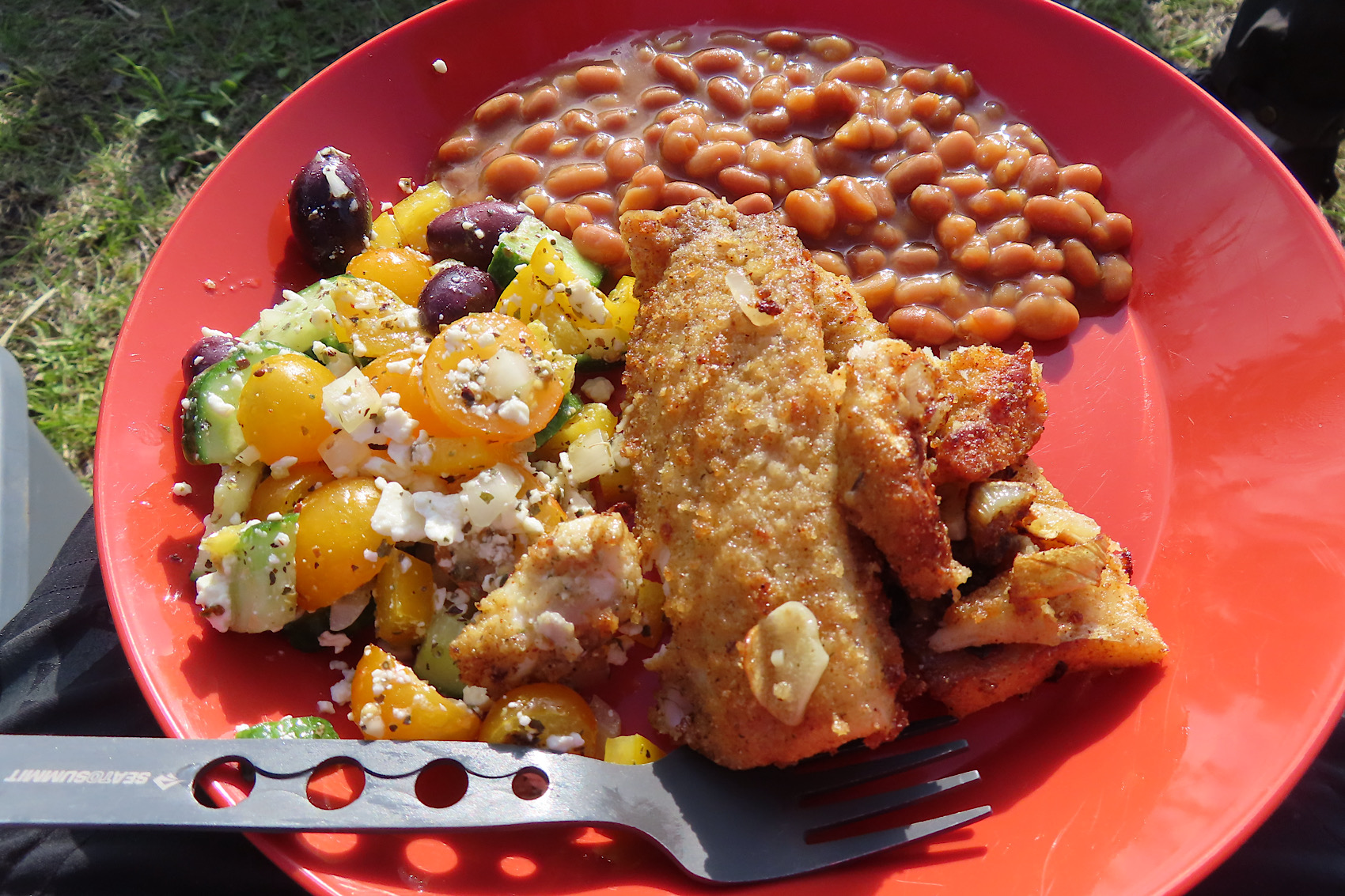
After lunch on a small island campsite, we continued to another sheltered island camp where fresh-caught walleye, baked beans, Greek salad, and brownies made for a memorable fisherman’s feast.
The Portage Everyone Will Remember
The following morning brought the challenge that would define the trip.
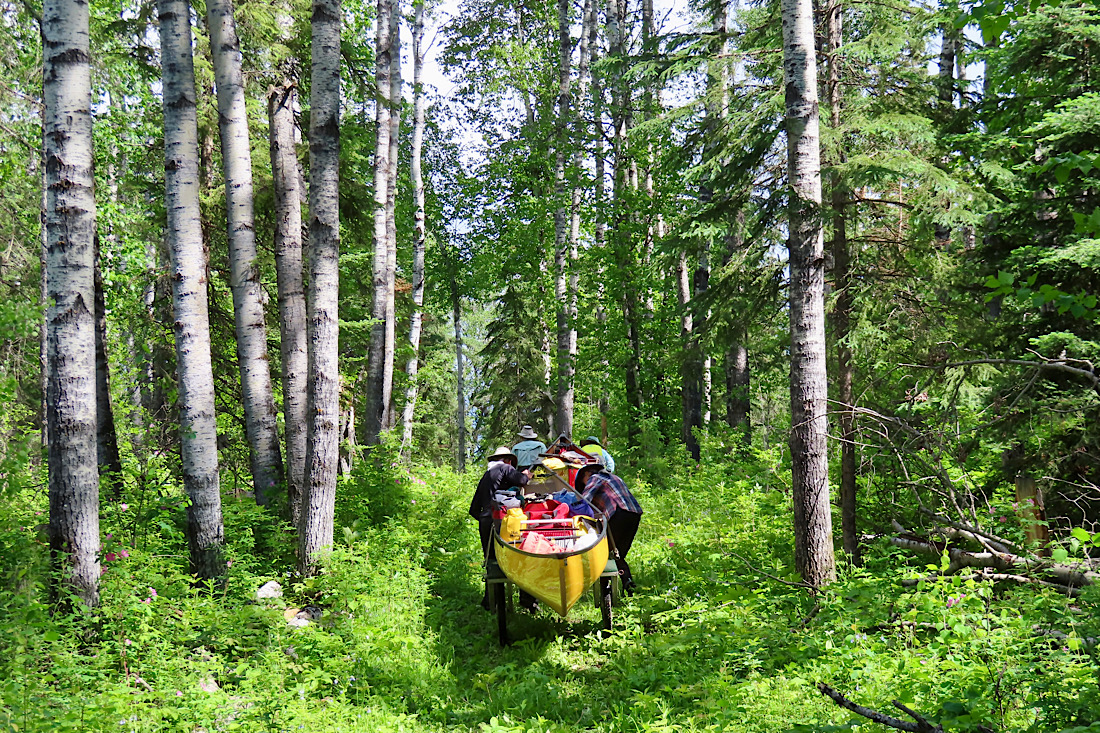
The 1.6-kilometre portage between Blackett and McGuffin Lakes had recently undergone trail improvements, but heavy rain and windstorms had clearly left their mark.
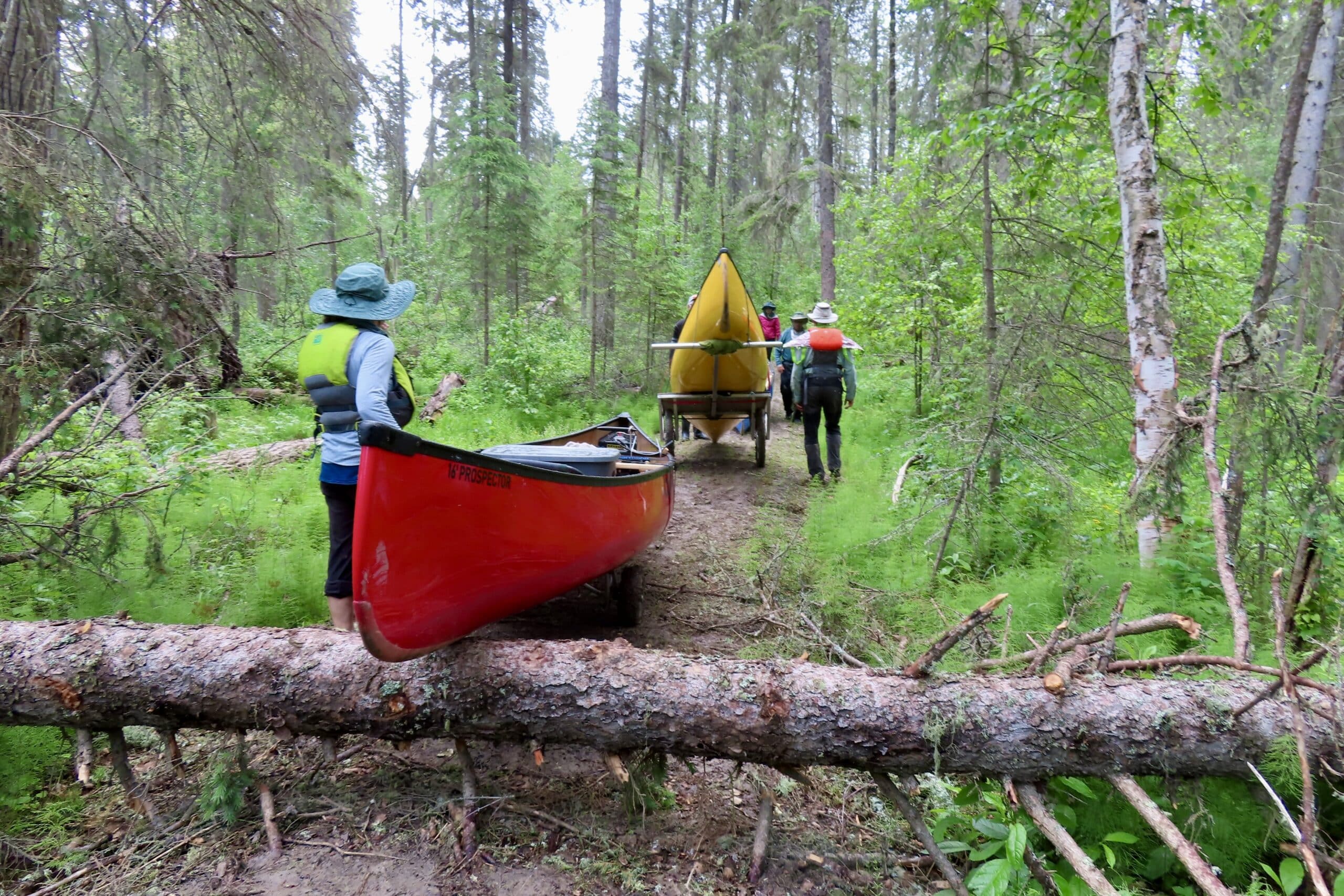
Eight fallen trees blocked sections of the trail.
Muddy sections covered the newly finished trailbed.
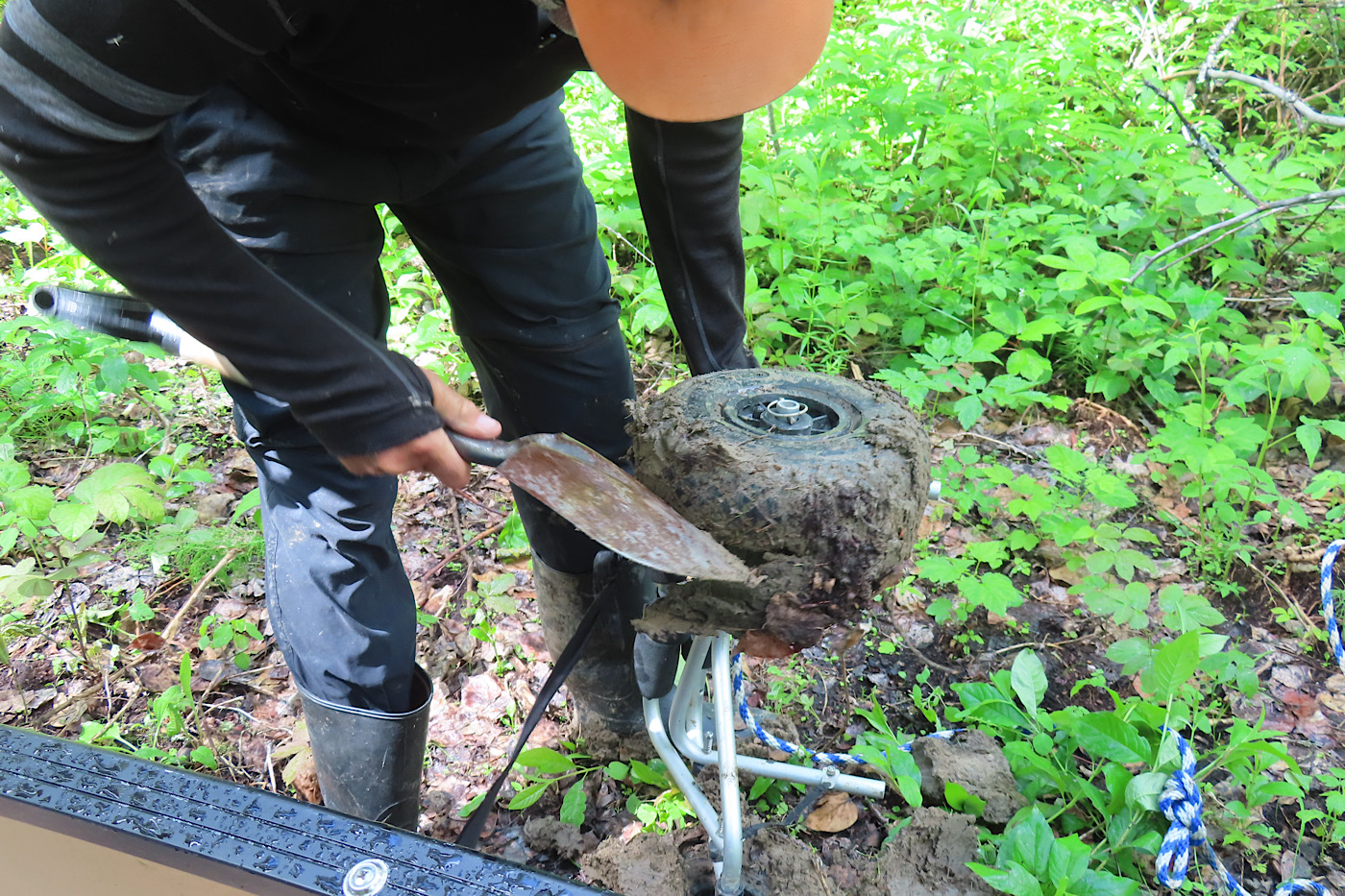
Progress was slow.
With canoes, tents, food barrels, fishing gear, and personal equipment to move, what should have taken about an hour stretched into more than three.
Somewhere during the process, we stopped asking how much farther and started celebrating every obstacle successfully overcome.
Then came the little black bear.
Rounding a bend, we spotted a black bear on the trail ahead. It treed almost immediately. We walked by, bear spray in hand.
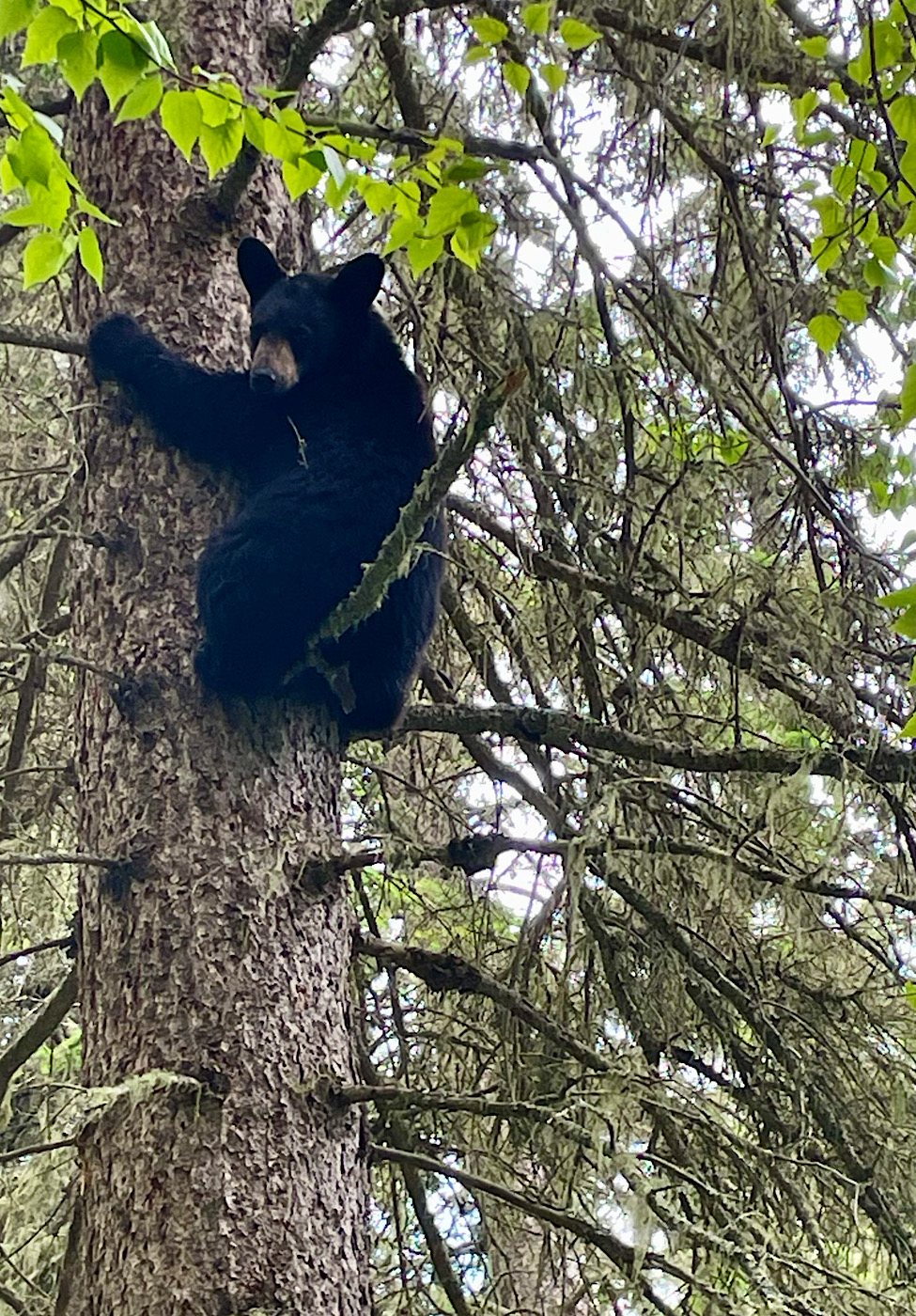
The adrenaline boost was enough to erase fatigue for at least a few minutes.
When we finally reached McGuffin Lake, another paddling group with three boats looked genuinely concerned after hearing our account of the portage conditions.
Our day wasn’t finished, however.
Arriving at the only campsite on the lake, we discovered it was already occupied.
Tired and not particularly enthusiastic about tackling another portage that evening, we pulled ashore and introduced ourselves.
An older gentleman carrying firewood smiled and called out to his adult son.
“We have company!”
Fortunately, the site contains two designated campsites. Within minutes, we had new neighbours and a place to spend the night.
A hearty bowl of spicy ramen soup with fresh walleye – you’ll find the recipe in this post – and homemade tortilla apple pies never tasted so good. We even found the energy to share the extra desert with our new camp-mates.
One Last Push Home
Compared to the previous day’s ordeal, the final morning felt easy.
The short 400-metre portage was flat, dry, and blissfully free of fallen trees. Along the winding waterway, yellow pond lilies bloomed while goldeneye chicks paddled frantically behind their mother. The sun shone and canoes reflected colourfully on the water.
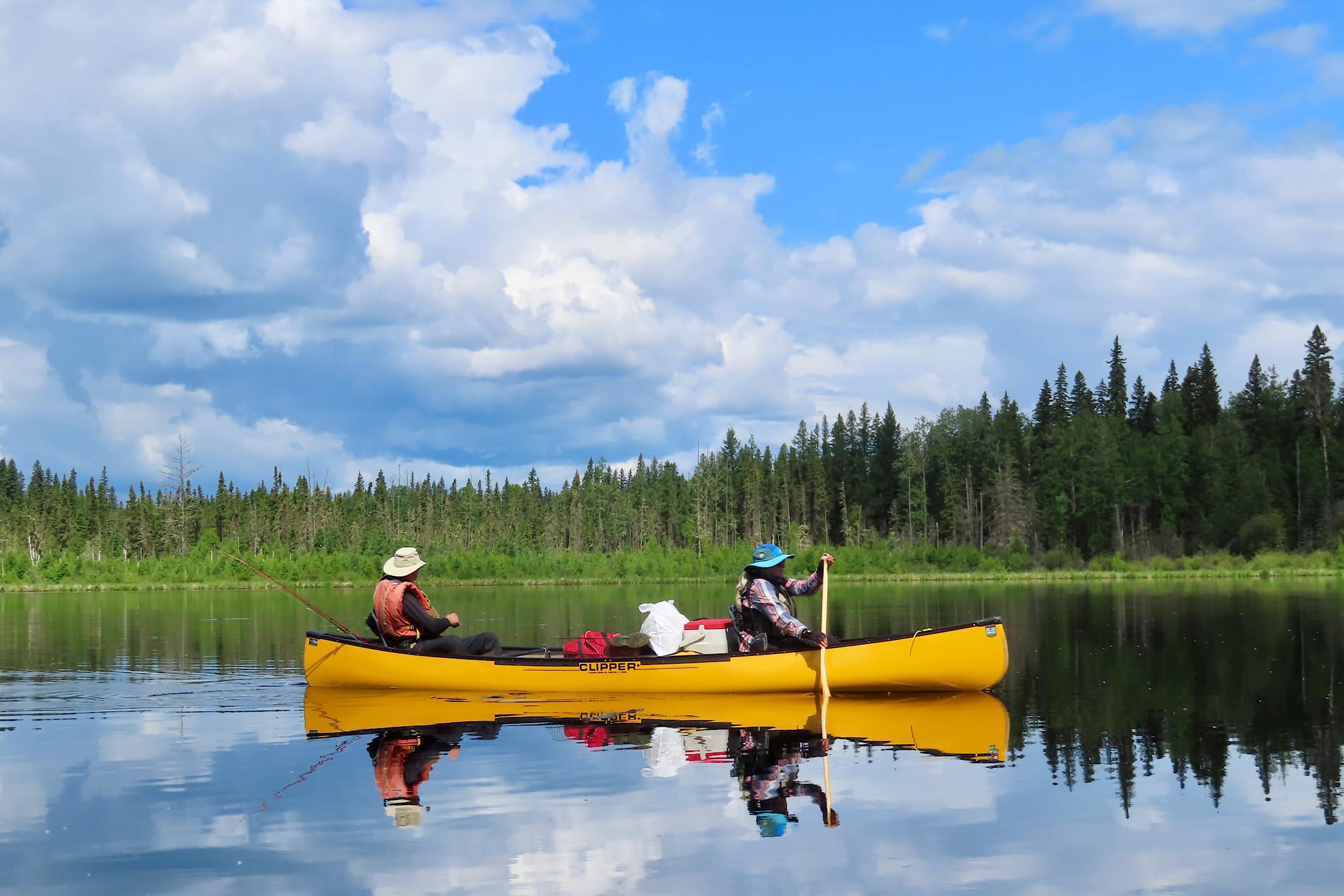
The challenge wasn’t the portage.
It was knowing the trip was almost over.
Birdsongs echoed through the boreal forest as we made our way toward Jackson Lake.
A storm cell gathered overhead just in time for lunch, sending everyone scrambling for rain gear before we pushed off again.
Oddly enough, the final 3.2-kilometre portage back to the vehicles felt easier than the initial trip in.
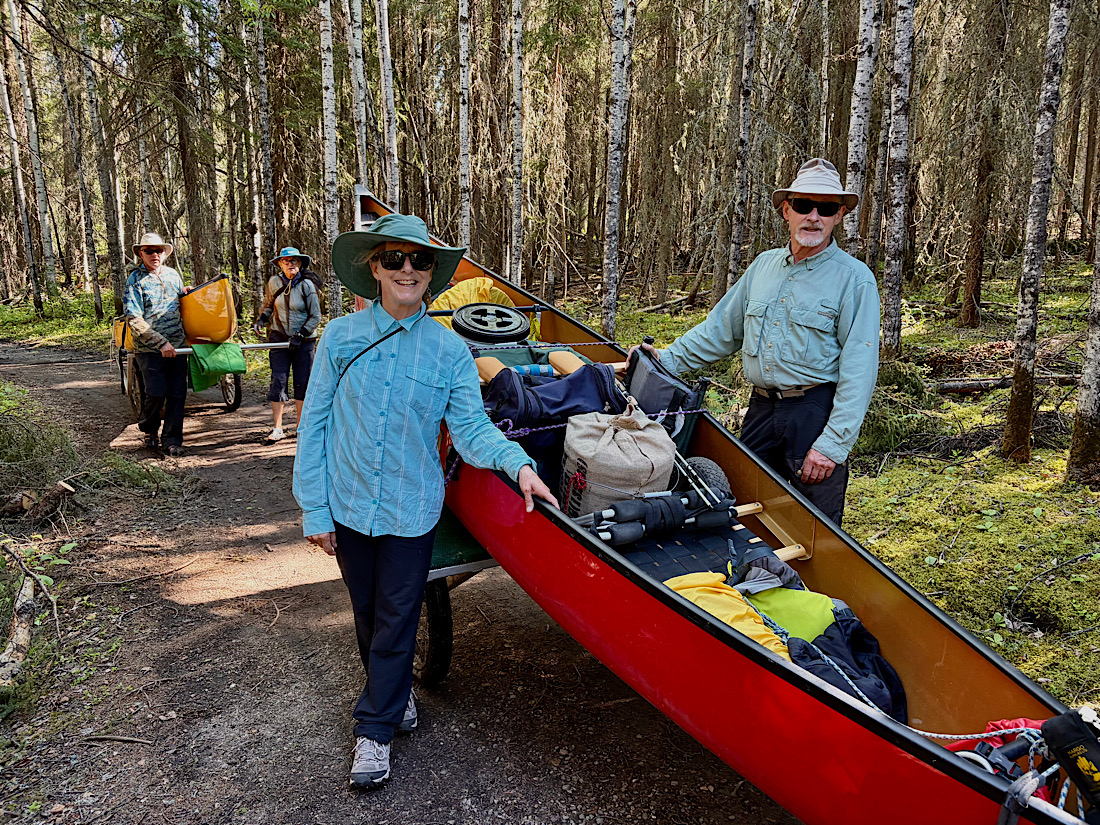
Maybe we were just a little stronger.
Perhaps we were motivated by thoughts of dry clothes and cold drinks.
Maybe it was more downhill than on the way in!
No matter what the reason, within 45 minutes the canoe carts were unloaded, gear packed and another Alberta paddling adventure had come to an end.
Too much fun.
Did you know active adventures are good for you for multiple reasons?
Here are 10 benefits of getting active outside!
Camping Along the Circuit
One of the best features of the Lakeland Canoe Circuit is its established backcountry camping system.
The route includes 18 designated camping areas, many equipped with picnic tables, fire pits, composting toilets, bear poles, or bear-proof storage lockers.
Several locations can accommodate larger groups, including Jackson Lake East, Jackson Lake South, Kinnaird Island, Blackett Lake, and Mile 10.
Campsites are first-come, first-served and currently free to use.
Fishing the Lakeland Canoe Circuit
Fishing opportunities are abundant throughout the route.
Northern pike, walleye, and yellow perch are the primary sport fish species, providing plenty of action for anglers.
Even when the fishing slowed, simply drifting quietly on the water with a rod in hand felt like part of the experience.
As always, check Alberta’s current fishing regulations before your trip.
Wildlife and Birding Highlights
One of Lakeland’s greatest strengths is its wildlife.
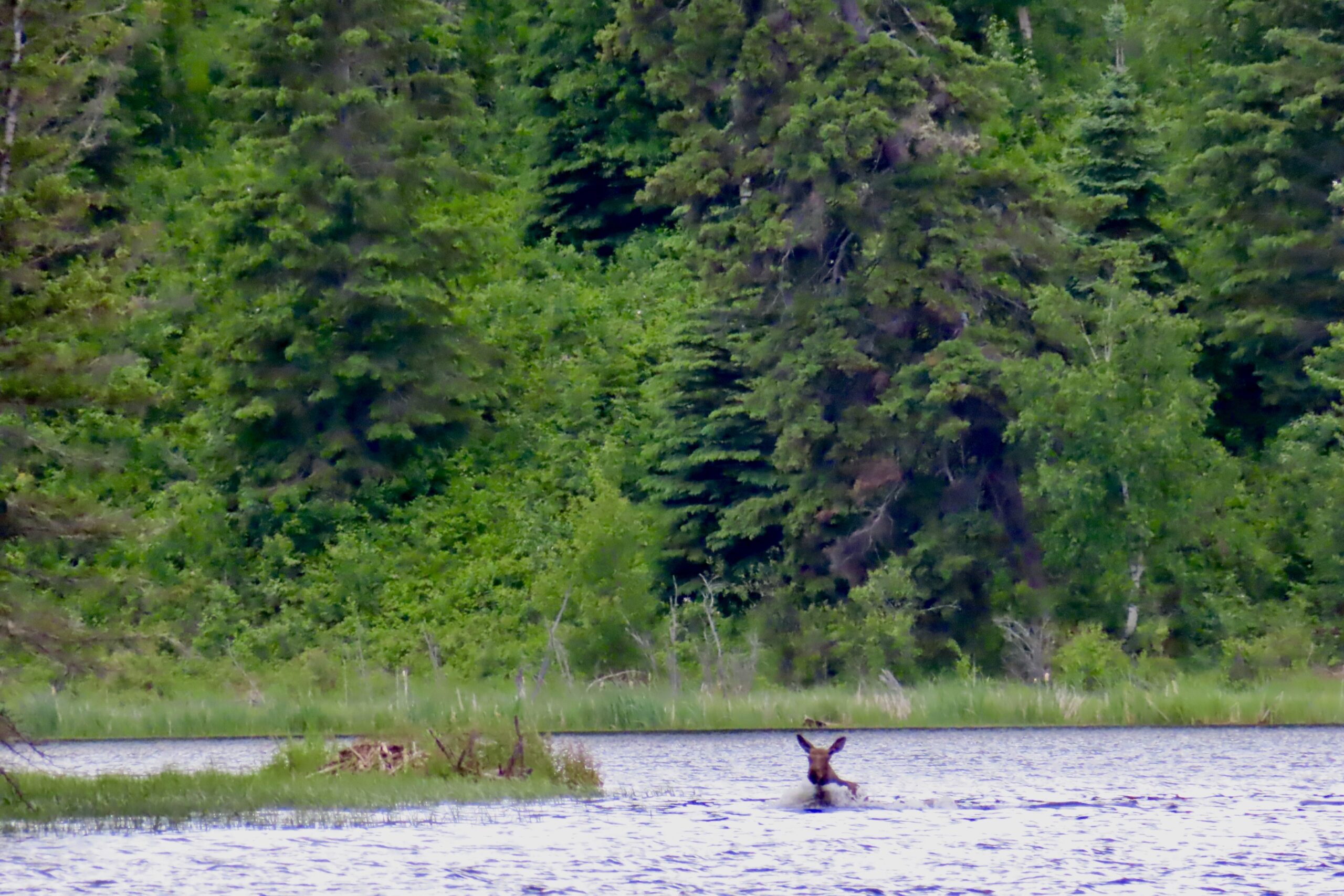
During our trip we observed moose, muskrat, beaver, chorus frogs, wood frogs, dragonflies, damselflies, swallowtail butterflies, and one memorable black bear.
Birders in our group recorded 49 species, including Common Loons, White Pelicans, Sandhill Cranes, Bald Eagles, Belted Kingfishers, Buffleheads, Common Goldeneye, American Wigeon, Merlin, and dozens of warblers and sparrows.
If you enjoy birding from a canoe, Lakeland feels like a floating observation platform.
Lakeland Canoe Circuit By the Numbers
- 🛶 38 km of paddling and portaging
- 🥾 3 major portages
- 🌲 8 downed trees on one trail
- 🐻 1 black bear encounter
- 🦆 49 bird species
- 🦟 Approximately 4 million mosquitoes (give or take)
- 🎣 Countless casts
- 😊 100% worth it
What to Know Before You Go
Get the Map
Download the official Lakeland Canoe Circuit map before your trip and familiarize yourself with campsites, portages, and route options.
Start at Jackson Lake Staging Area
Most paddlers begin at the Jackson Lake Staging Area on Highway 663.
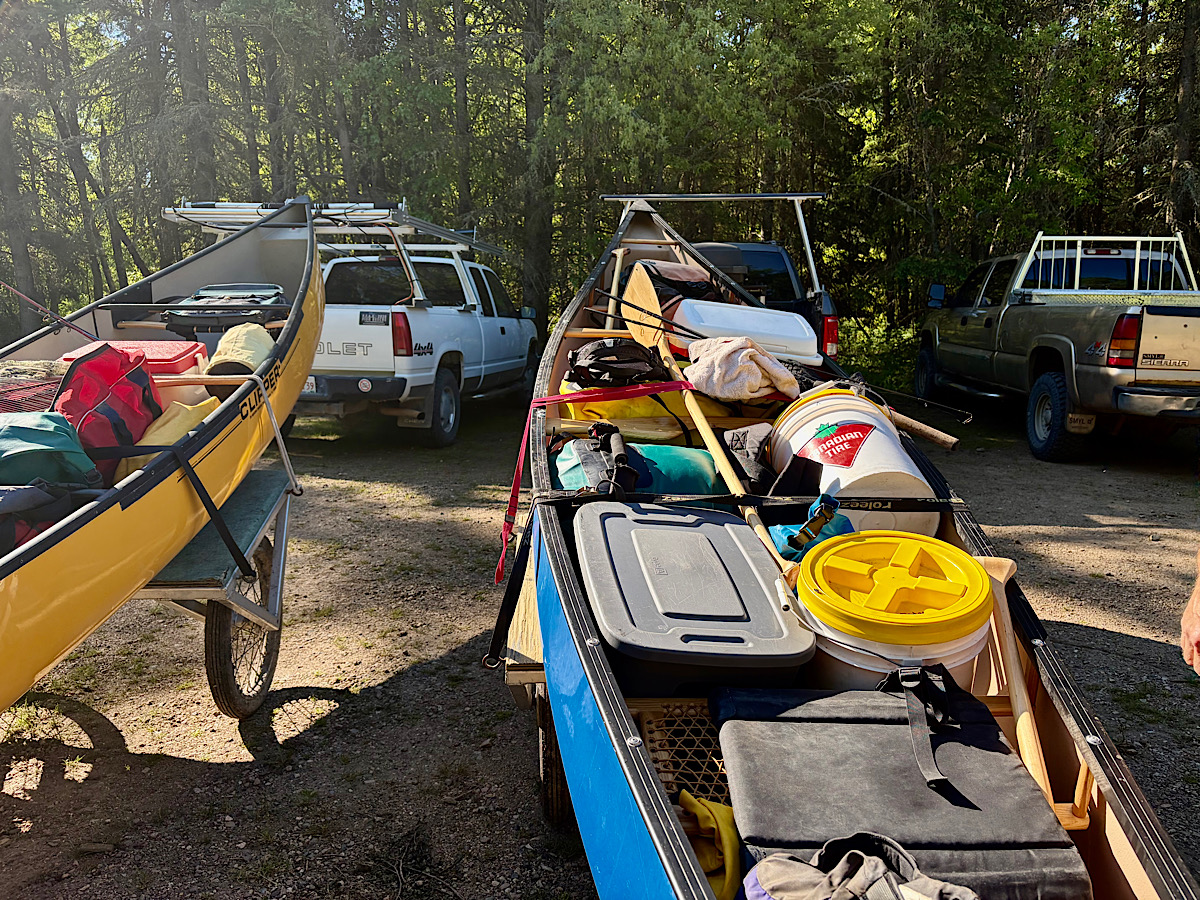
If you’d rather skip the initial 3.2-kilometre portage, local shuttle options from the Lac La Biche area may be available to transport paddlers and gear to Mile 10 Camp on Jackson Lake.
Expect Portages
The route’s biggest challenge is not the paddling—it’s the portaging. Build extra time into your itinerary and be prepared for conditions to vary significantly from year to year.
Complete a Travel Notification Form
Alberta Parks recommends completing a Voluntary Backcountry Travel Notification Form before your trip.
Bring Bug Protection
Trust us on this one.
Pack insect repellent, lightweight long sleeves, and perhaps even a bug jacket.
Your future self will thank you.

Final Thoughts
The Lakeland Canoe Circuit reminded us that memorable outdoor adventures aren’t built from perfect weather or easy travel days.
They’re built from the stories that happen along the way—the bear on the trail, a nasty portage, campfire laughter, the father-and-son paddlers who welcomed unexpected company and the satisfaction of completing the trip under silent power.
Love canoeing and kayaking? Check out the Paddle section of our blog for more trip inspiration!


Leave a Reply