Just offshore from San Carlos lies one of the most important seabird nesting islands in the Gulf of California — and one of the easiest to explore by kayak.
Launching from the beaches near Totonaka RV Park, it’s possible to circle the island in a relaxed morning paddle while watching seabirds, turtles, and marine life along the way. For paddlers looking to add a wildlife experience to their San Carlos visit, this short trip delivers far more than its modest distance suggests.
Disclosure: This post contains affiliate links. If you make a purchase through one of our links, we may earn a small commission at no extra cost to you. Thanks for supporting TimeTravelTrek.
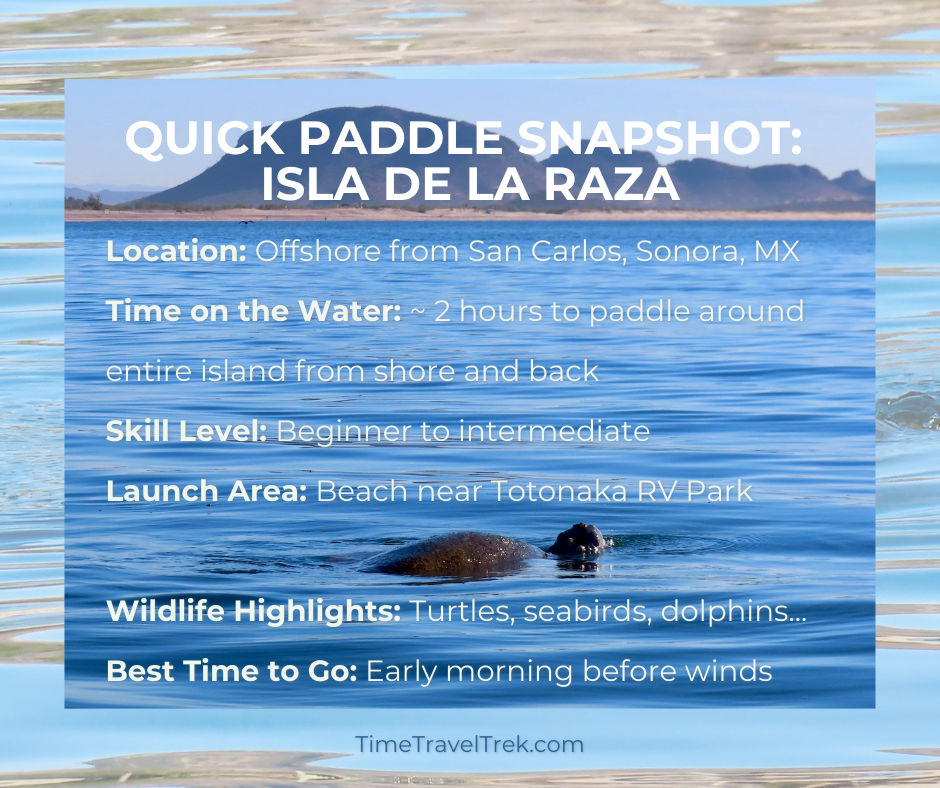
Table of Contents
San Carlos Adventures: Kayaking Around a Bird Sanctuary
Isla de la Raza may look like a small, rocky outcrop from shore, but paddle closer and you’ll discover a vibrant sanctuary where – if the timing is right – hundreds of thousands of birds gather to breed each year.
Isla de la Raza is a protected seabird sanctuary in the Gulf of California, located just offshore from San Carlos and directly across the main road in front of Totonaka RV Park. This stretch of shoreline makes an easy launch point for exploring the nearby islands.
Note: This is the 5th post in our series San Carlos, Sonora: An Active Basecamp on the Sea of Cortez, where we explore RV travel, paddling routes, hiking trails, biking loops and so much more. Be sure to catch the whole series before you start planning your own trip!
Isla de la Raza
Despite its small size, Isla de la Raza plays an enormous role in global seabird conservation.
The island hosts nearly the entire breeding populations of two remarkable species:
- Heermann’s Gull (Larus heermanni) – About 90% of the world’s population nests here.
- Elegant Tern (Thalasseus elegans) – The majority of the global breeding population gathers on this island each spring.
Additional colonies include Royal Terns, along with regional species such as Yellow-footed Gulls, Black-vented Shearwaters, and several species of storm petrels.
Altogether, as many as half a million birds may nest on Isla de la Raza at the height of the breeding season.
This concentration of wildlife is possible because of the nutrient-rich waters of the Gulf of California, often called the “aquarium of the world.” Abundant fish and marine life support the dense seabird colonies that return here year after year.
Today the island is carefully protected, and conservation efforts have helped restore nesting success after past disturbances — making Isla de la Raza an important conservation success story for Mexico.
Pick up a copy of our printable Paddling Journal in our Etsy shop
and add this special trip to your list of more paddle routes for the future!

Who Is This Paddle Best For?
Kayaking around Isla de la Raza is ideal for:
Wildlife lovers
Birders and nature enthusiasts will appreciate the chance to paddle beside one of the most important seabird colonies in the Gulf of California.
Beginner to intermediate paddlers
The distance is short and the island can be circled in about two hours, making it manageable for recreational kayakers in calm conditions.
RV travellers staying in San Carlos
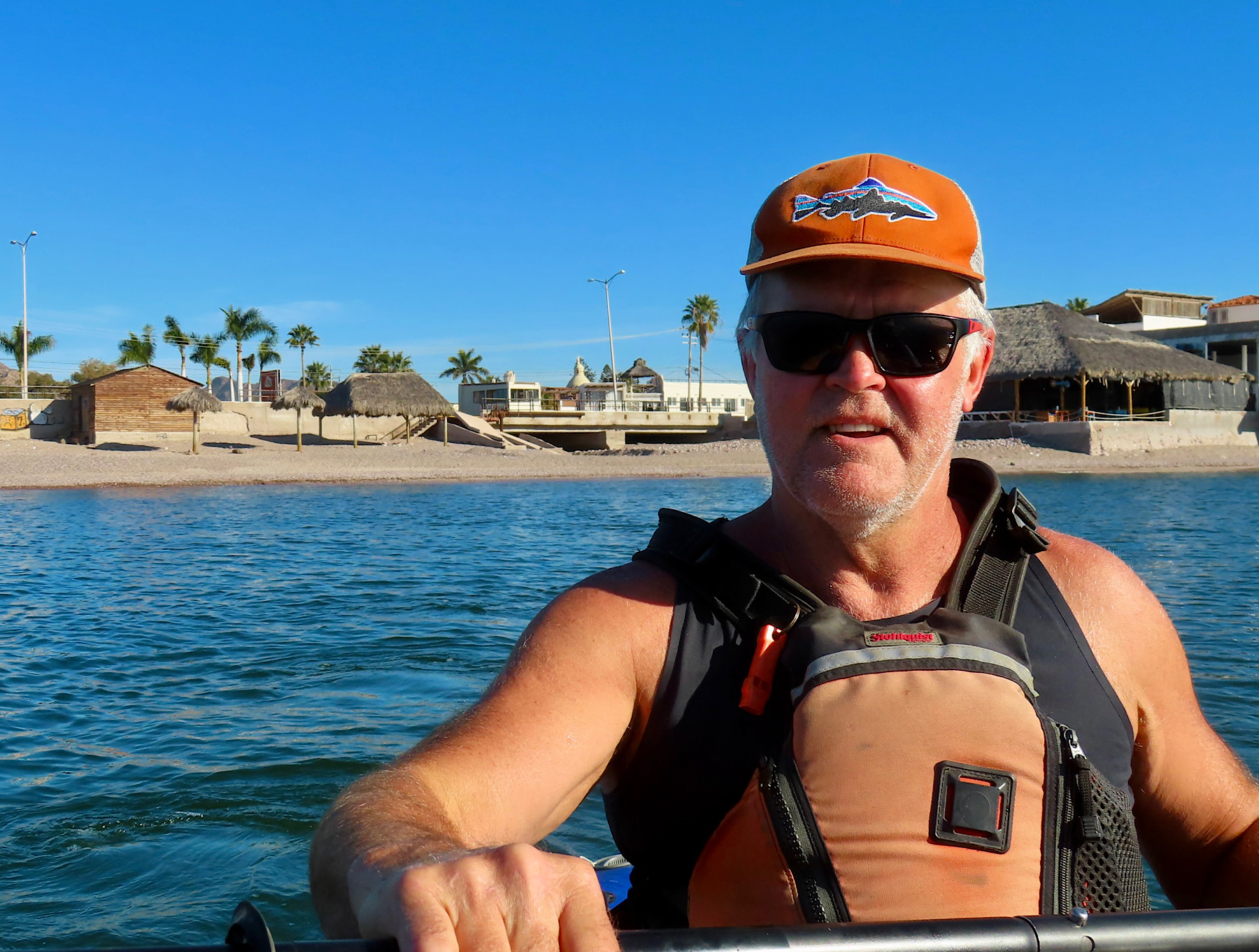
With easy access launch points near the beaches by Totonaka RV Park, this is a convenient half-day adventure.
Early risers
Calmer morning water makes the paddle easier and wildlife sightings more likely.
Not ideal for:
Very windy days or paddlers uncomfortable with open water crossings.
Get a bird’s eye view of Isla de la Raza from the summit of Tom’s Peak!
What’s in a Name?
The island’s name often causes a little confusion.
Locally you’ll see it written as Isla de la Raza, but the name actually derives from the Spanish word “rasa,” meaning flat. Given the island’s low profile, the original name likely referred to its flat topography.
The spelling “Raza” appears on local maps and has simply become the commonly used version.
Whatever the spelling, the island is tiny — and easy to miss on a map.
Covering only 150 acres, Isla de la Raza is roughly the same size as the Calgary Zoo in Canada. Yet within that compact space lies one of the most important seabird breeding sites in the eastern Pacific.
The island rises only 35 metres (115 feet) above sea level and consists mostly of low volcanic hills and sedimentary valleys layered with centuries of seabird guano deposits.
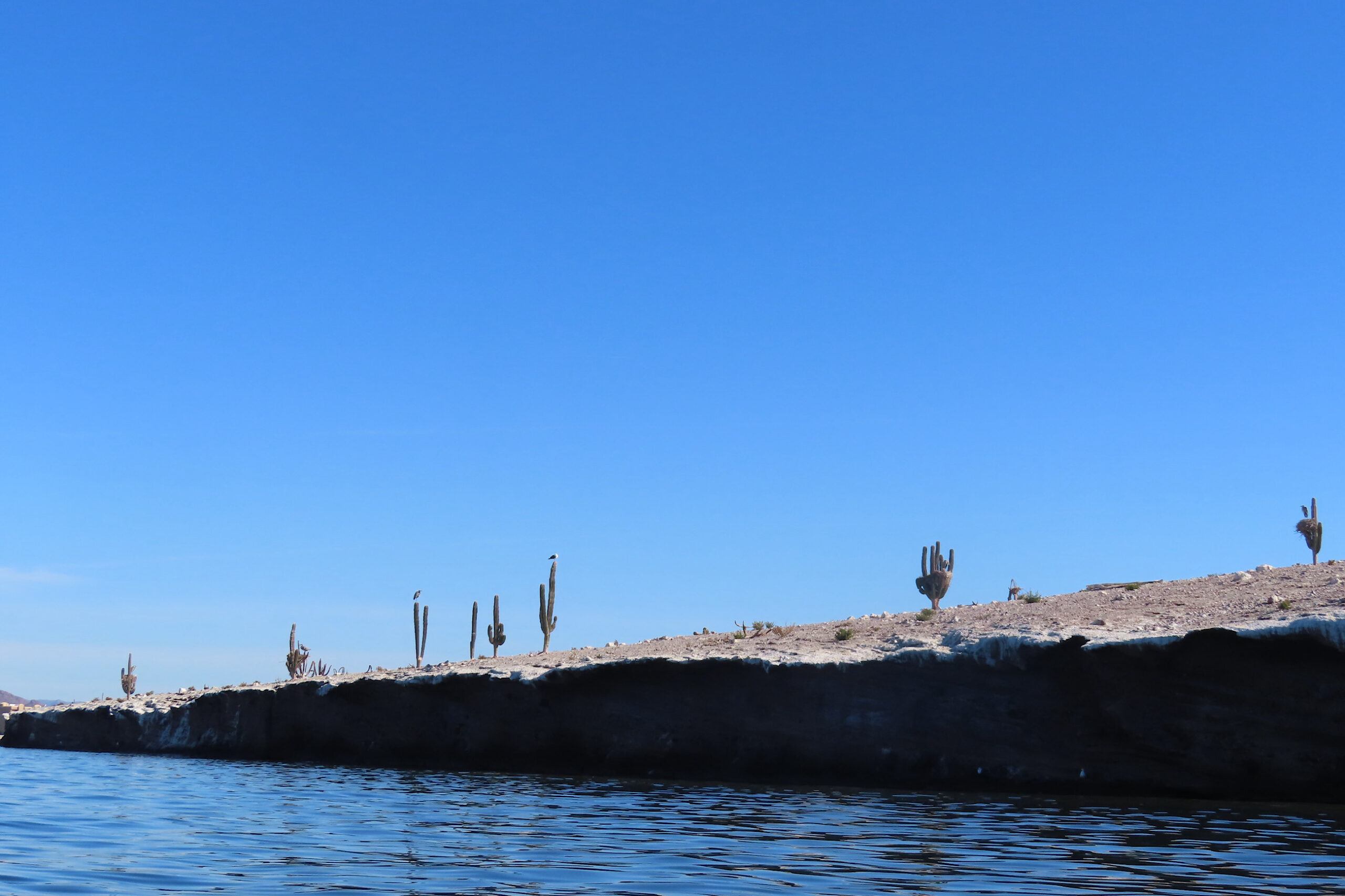
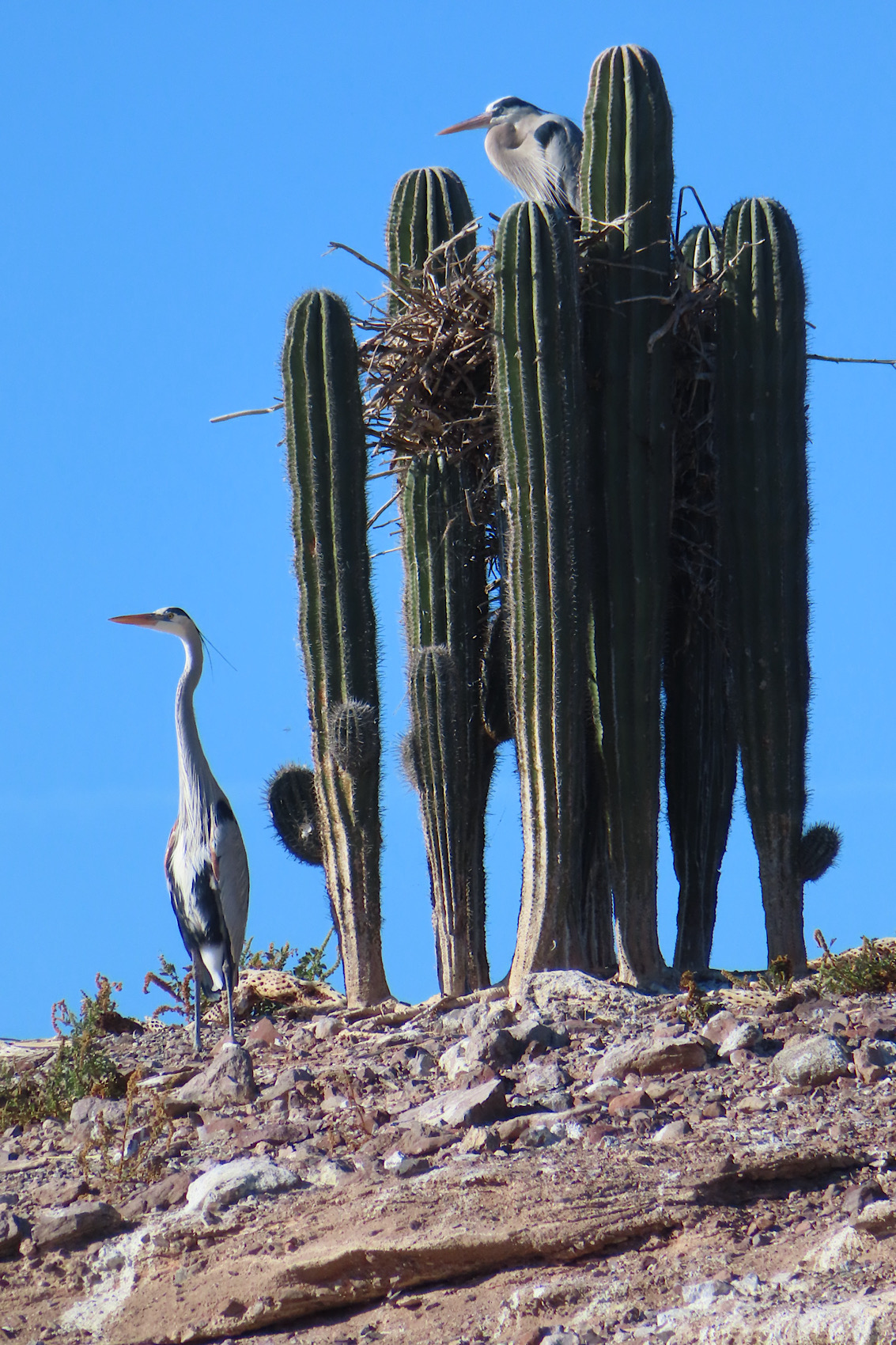
Despite the harsh desert environment, a few hardy plants survive here. Two species of cholla cactus dominate the landscape alongside saltbush, with scattered cardón cactus and a few pitahaya and senita plants dotting the island.
These sparse plants provide perching spots — and occasionally nesting locations — for some of the island’s resident birds.
Birding Around Isla de la Raza
One of the joys of paddling around Isla de la Raza is how alive the island feels.
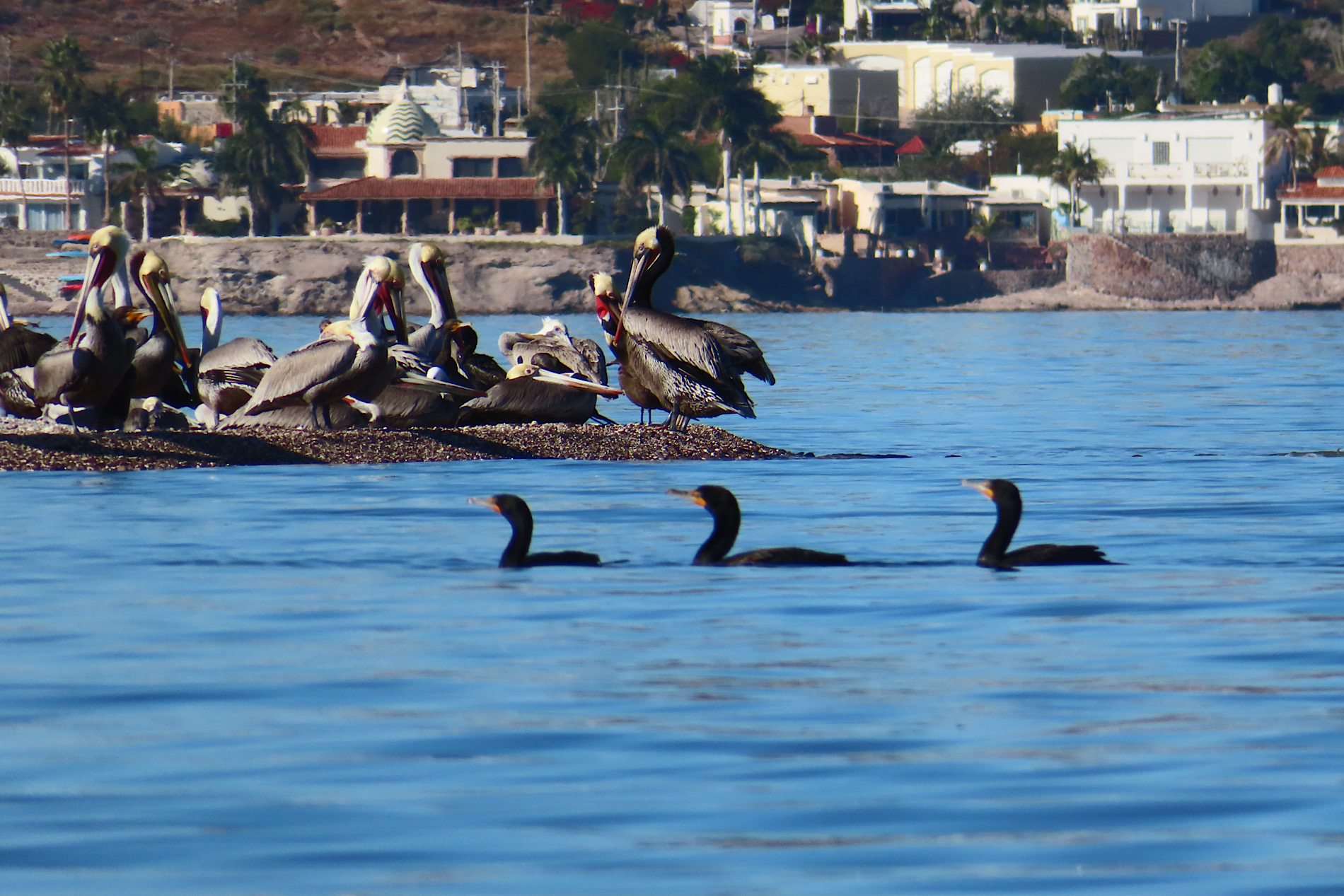
Seabirds wheel overhead, glide low across the water, or gather noisily along rocky ledges. During nesting season, the air can be filled with the constant motion and sound of thousands of birds coming and going… and smell – be prepared!
Many of the Heermann’s Gulls that nest here actually migrate from as far away as British Columbia, while Elegant Terns travel incredible distances from Peru and Chile to reach this island each year.
Even outside peak nesting periods, the island remains an active wildlife area and a rewarding paddle destination.
How Long Does the Paddle Take?
The full circuit around Isla de la Raza is relatively short.
Most paddlers can circle the island in about two hours, depending on how often you stop to watch wildlife or drift quietly near the rocky shoreline.
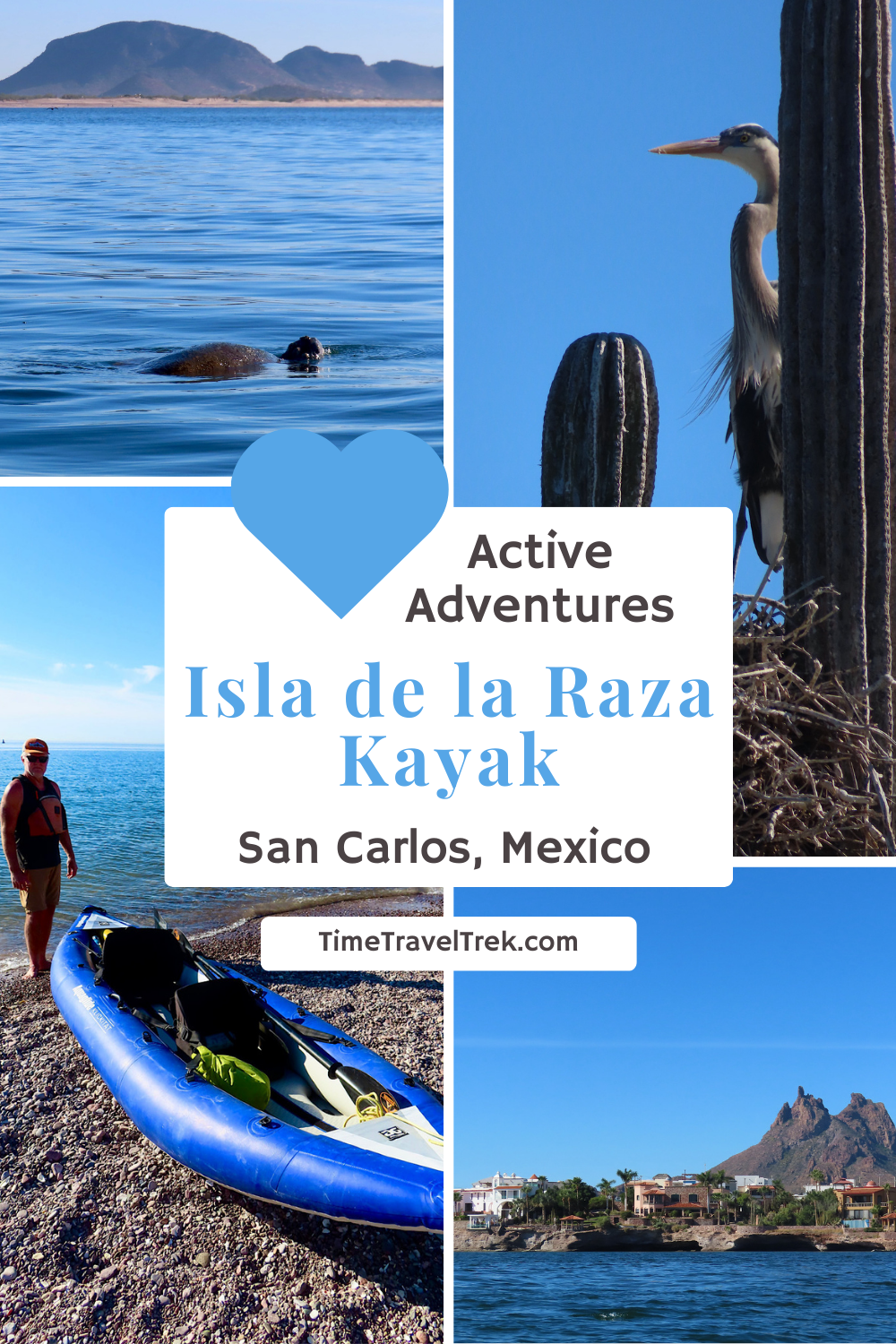
During our paddle we spotted three sea turtles, watched Great Blue Herons nesting improbably among cactus, and peered into the clear water over a small reef system where fish darted beneath the kayak.
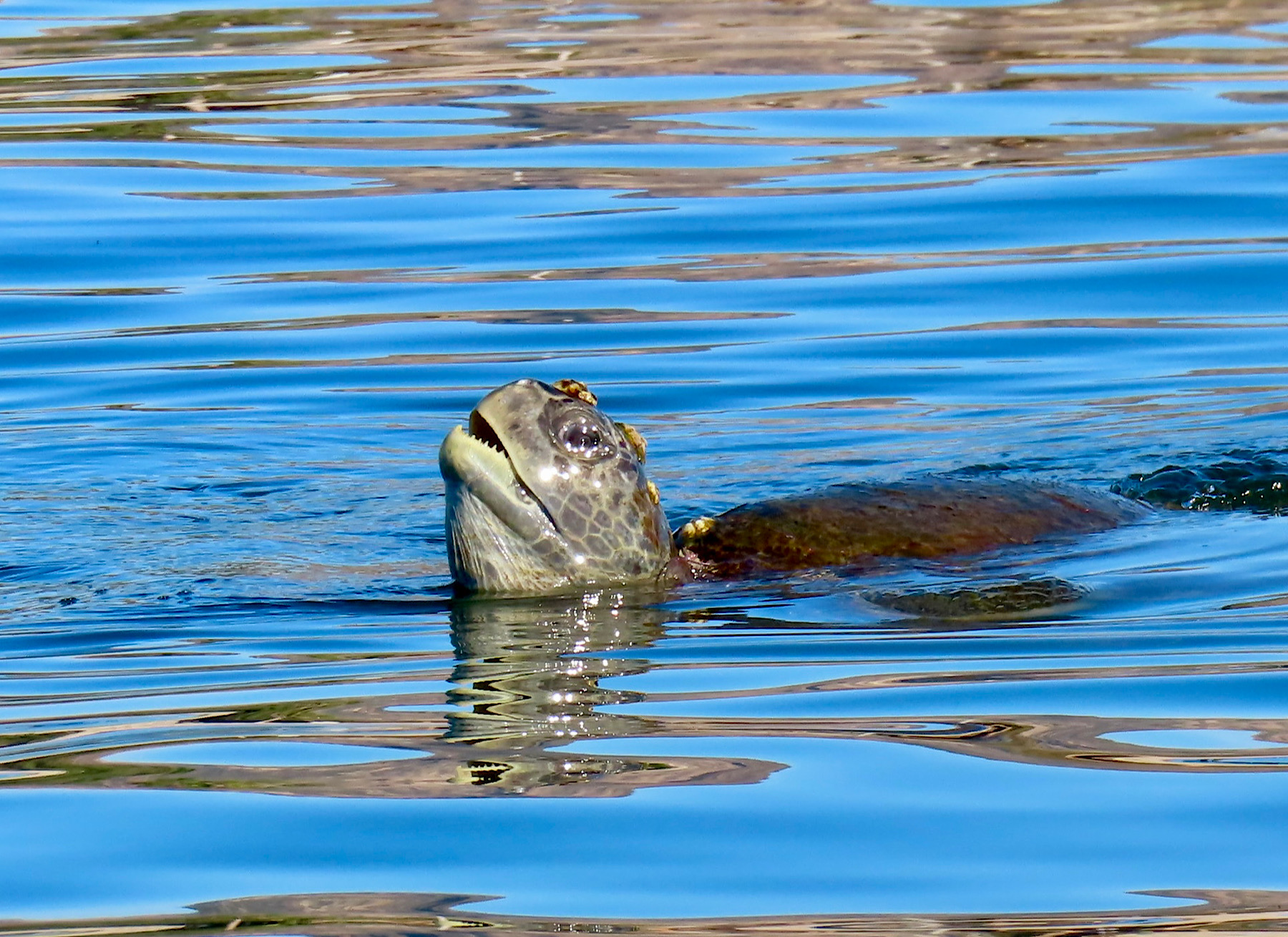
Dolphins and sea lions are also frequently seen in this area – but none for us today.
In total we spent about three hours on the water, adding a leisurely paddle along the mainland shoreline past several of the larger beachside homes before returning to our starting point.
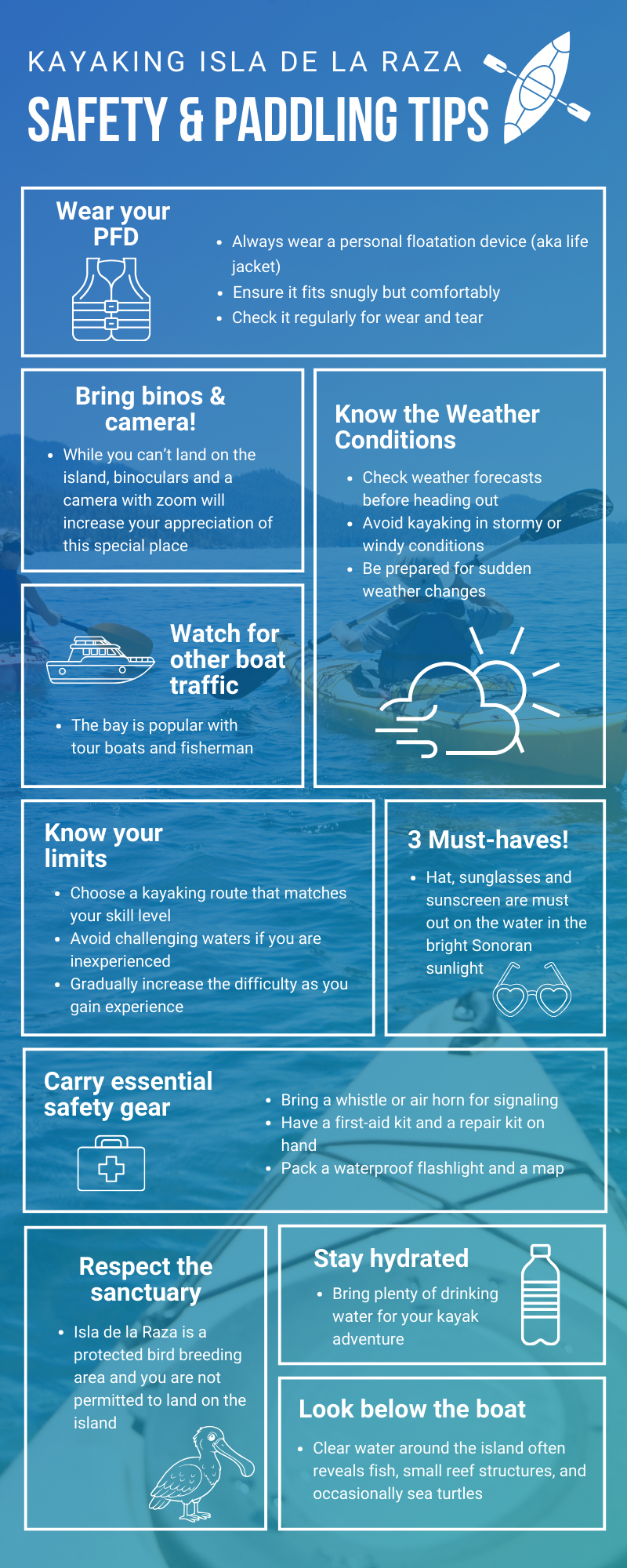
One thing to keep in mind: the wind often begins to build by late morning, particularly after noon. Starting early allows for calmer water and better wildlife viewing conditions.
Kayaking Isla de la Raza
Kayaking around Isla de la Raza offers a different perspective on San Carlos — one where quiet paddling, seabird colonies, and desert islands combine into a memorable morning adventure.
If you’re already exploring the region by kayak, you might also enjoy paddling the calm waters of the nearby Soldado Estuary, another wildlife-rich area just a short distance down the coast.
Together, these paddles reveal why San Carlos continues to earn its reputation as one of the most scenic and wildlife-filled corners of the Gulf of California.
PIN THIS POST FOR FUTURE REFERENCE!


Leave a Reply