Peterborough’s canoe museum is more than a collection of boats—it’s a place where Canadian history unfolds, one paddle stroke at a time.
If you’re travelling Ontario by RV or planning a cultural stop with depth, this is one destination worth slowing down for.
Disclosure: This post contains affiliate links. If you buy something from one of our affiliates, we receive a small commission at no extra charge to you. Thanks for helping to keep our blog up and running!
Table of Contents
First-Time Visitor to Peterborough’s Canoe Museum
I couldn’t help but stop and stare.
There was a stillness in that moment I didn’t expect.
No noise. No movement. Just rows of canoes suspended in time.
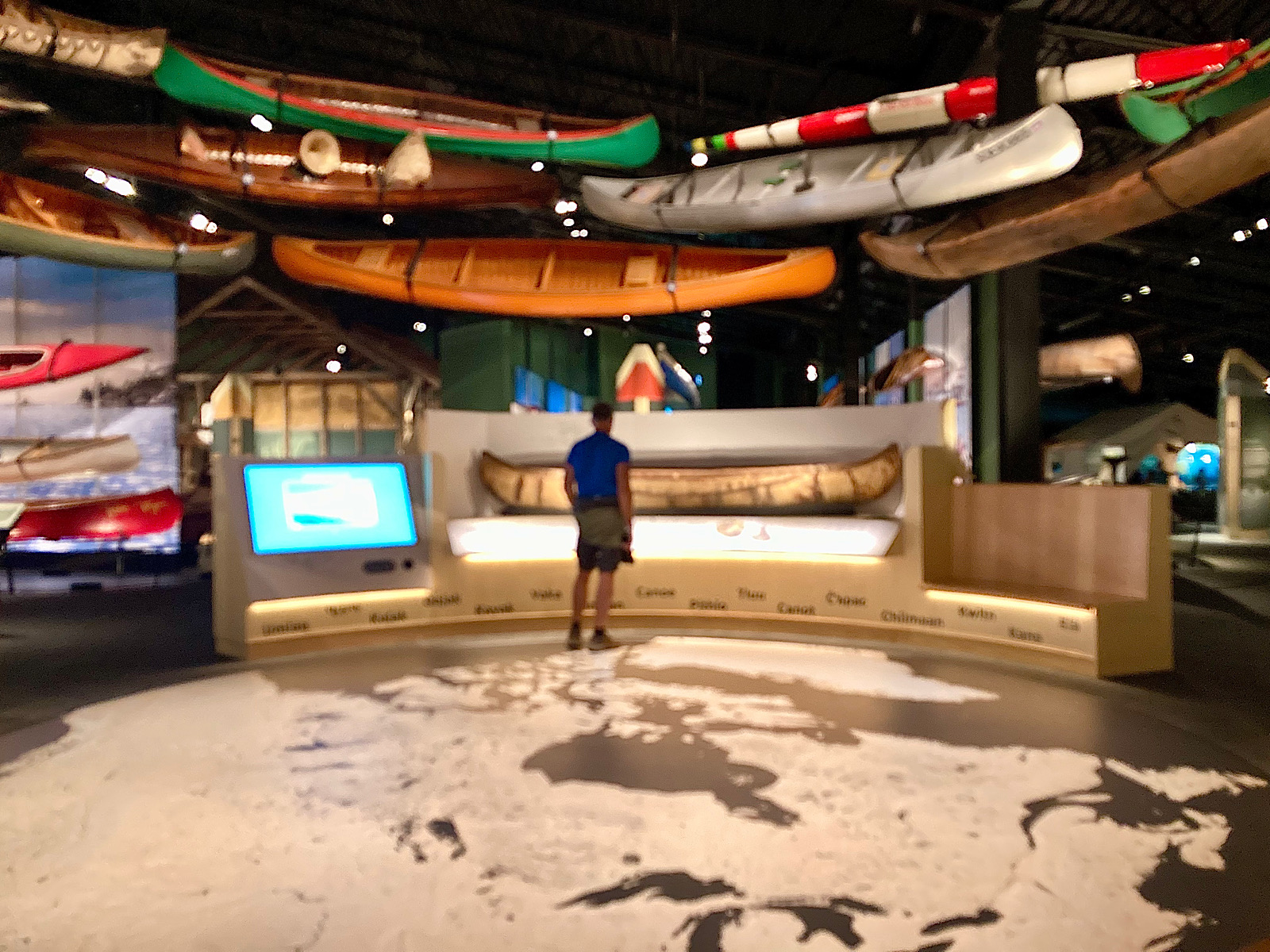
I found myself scanning the shapes—wondering where each one had been; what water had carried it; who trusted it enough to climb in and push away from shore.
From the upper landing, I looked through a glass wall into rows upon rows of canoes stacked in quiet order—ancient dugouts, delicate birchbark builds, elaborately carved coastal vessels, and sleek modern racers.
Each one held a story. Together, they held a country.
We spent nearly three hours inside the Canadian Canoe Museum—and it didn’t feel like enough.
Because to understand the canoe in Canada isn’t just to look at it.
It’s to understand how it shaped movement, connection, survival… and identity.
You’re reading another one of the posts in our Canoe Connection Series
Follow the full journey here: Ontario by Canoe: Connecting Past and Present
What Is a Canoe Museum?
At first glance, it might seem simple—a museum dedicated to canoes.
But step inside, and you quickly realize it’s something much bigger.
The canoe is a thread that ties together cultures, landscapes, and histories across not just Canada—but the world.
From the headwaters of a river to the open ocean, paddled watercraft have shaped how people move, trade, explore, and connect with the natural world.
Across continents and thousands of years, canoe traditions evolved from deep knowledge of local environments. Materials, shapes, and techniques all reflect the land and water they came from.
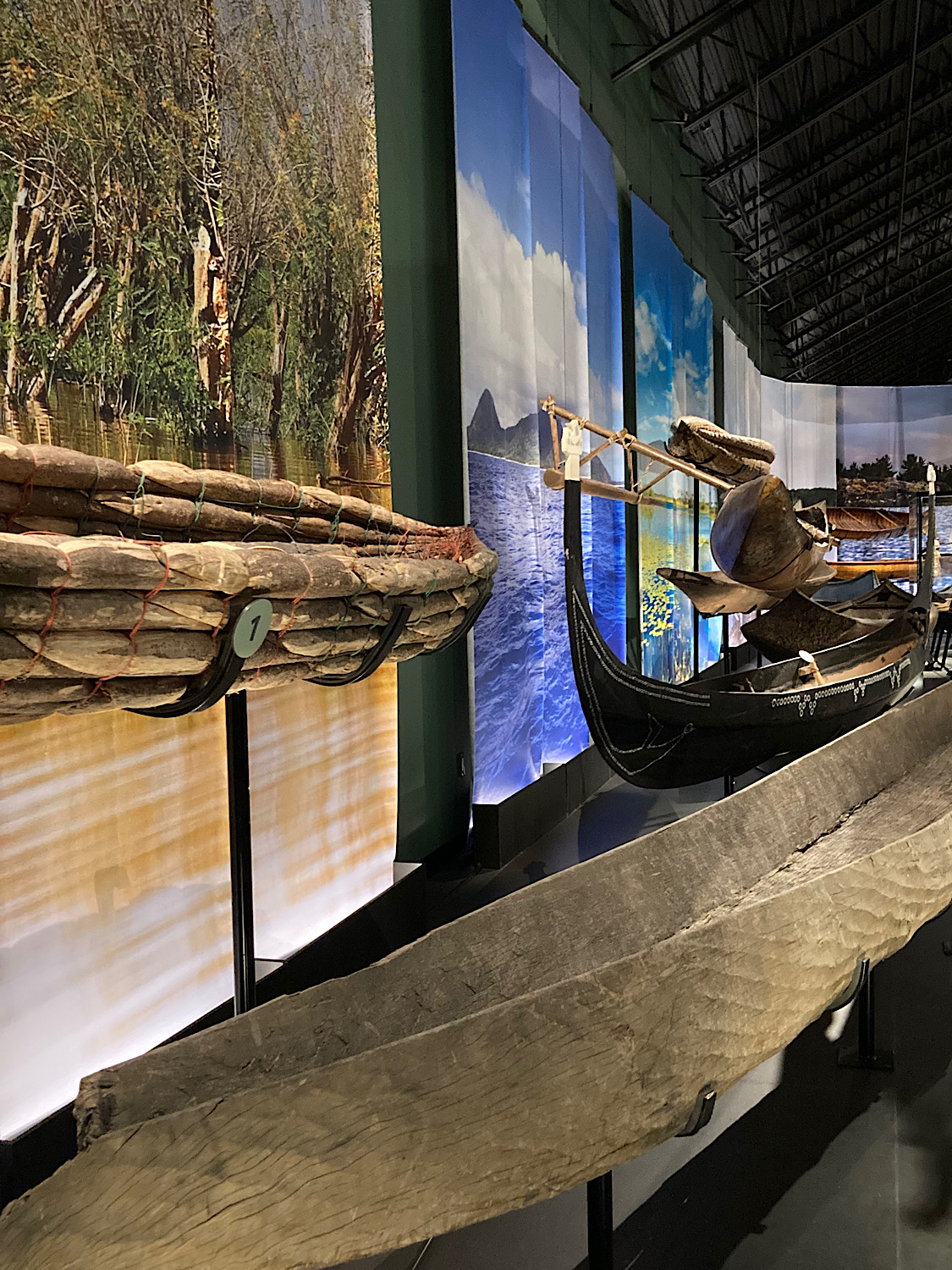
Here, those stories converge.
From dugout canoes carved from massive cedar logs on the Pacific coast…
to lightweight birchbark canoes designed for portaging through the Canadian Shield…
to reed boats, skin-on-frame kayaks, and ocean-going vessels from around the world…
This is not just a collection.
It’s a global story of human connection to water.
(I have to admit, we’re so looking forward to sharing the paddling experience with our young granddaughter that her first Christmas gifts at 6 months of age were a child’s-sized paddle, a stained glass canoe ornament for the tree and two books: One Dog Canoe and Paddle to the Sea!)
Why Is There a Canoe Museum in Peterborough?
The answer lies in both history—and industry.
The story begins with one canoe.
In the late 1950s, Kirk Wipper, a university educator and camp owner in Ontario’s Haliburton Highlands, was gifted a hand-carved dugout canoe from the 1890s. It sat quietly in the dining hall at Camp Kandalore—but it didn’t stay a single display piece for long. That canoe sparked a curiosity that grew into something much larger.
Over the years, Wipper began gathering other watercraft—birchbark canoes, freight boats, expedition vessels—each with its own story of travel, survival, and craftsmanship. What started as a personal passion slowly evolved into a globally recognized collection, known as the Kanawa International Museum of Canoes, Kayaks and Rowing Craft.
Now, collections like this don’t stay small.
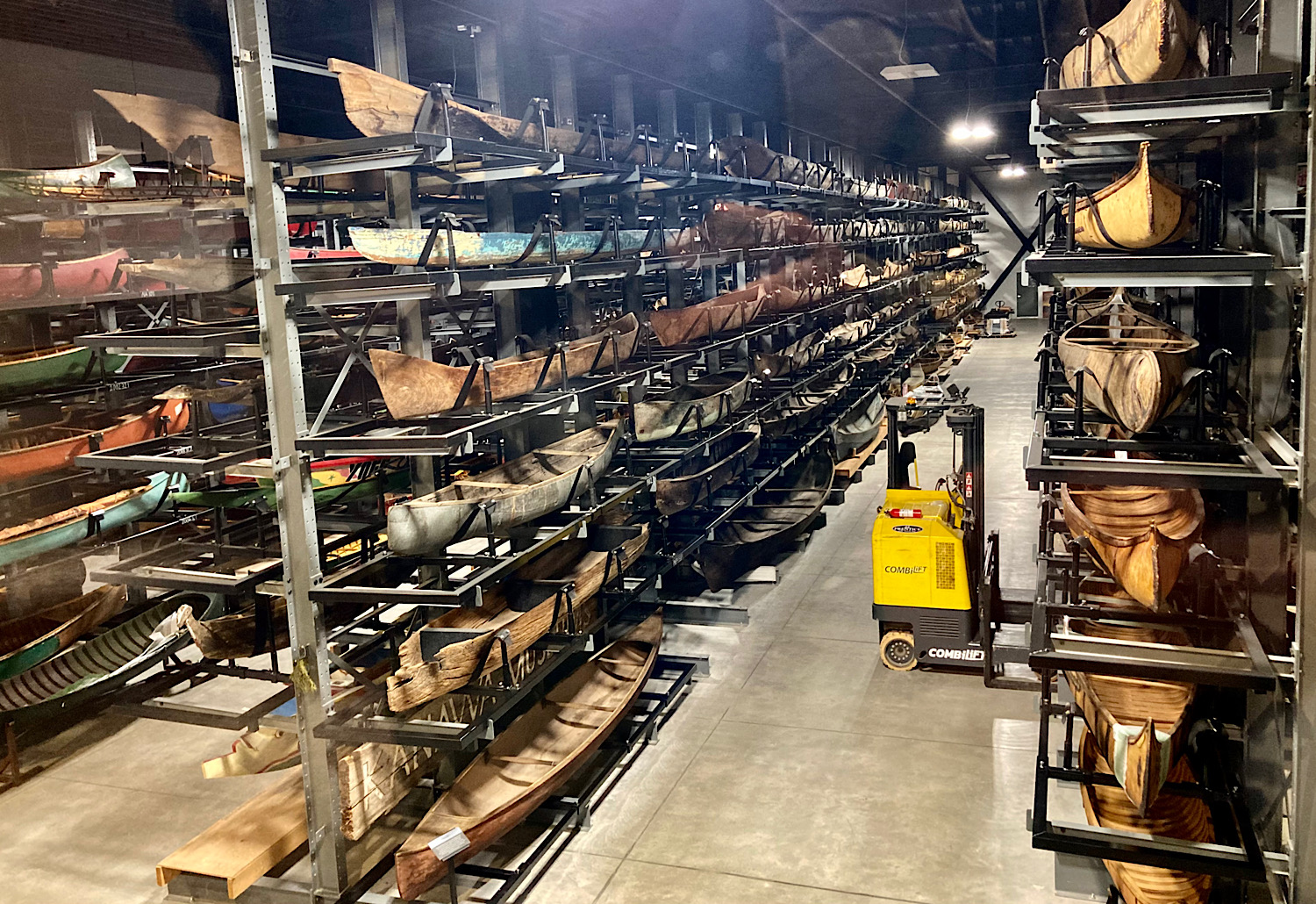
As the number of boats grew into the hundreds, so did the challenge of protecting them. In the 1990s, the collection found a new home in Peterborough—where it opened to the public as the Canadian Canoe Museum.
Peterborough is more than a backdrop. In the late 1800s and early 1900s, it was a hub of canoe-building innovation. Companies like the Peterborough Canoe Company helped shape the golden age of canoe manufacturing, sending beautifully crafted boats across Canada and around the world.
Many of those journeys have come full circle.
Some of the very canoes built here decades ago have returned—not to the water, but to this location—where their stories are preserved, layered alongside the broader history of travel, trade, and connection that helped define Canada itself.
A Museum That Finally Meets the Water
For years, the museum lived in a repurposed factory—interesting but disconnected from the very element that defines the canoe… water.
That changed in 2024 when doors opened to its new home on the shores of Little Lake, beside the historic locks on the Trent-Severn Waterway.
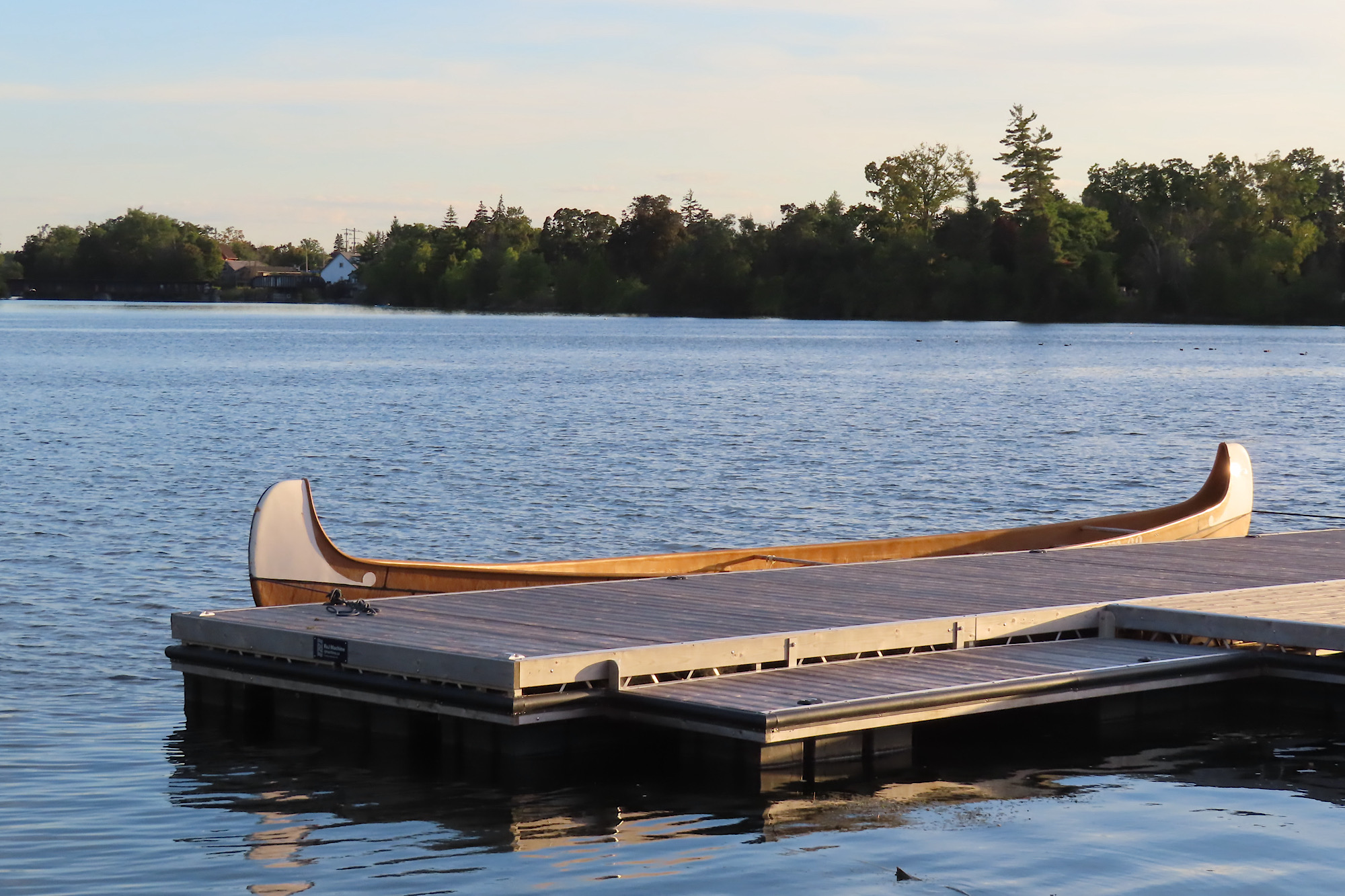
Now the experience feels complete.
You can literally paddle up to the museum.
The new purpose-built facility reflects this connection in every detail:
- A two-storey, 65,000-square-foot design
- Natural materials and flowing architectural lines inspired by waterways
- A full collection hall displaying 100% of the watercraft
- Lakefront access with docks, boardwalks, and paddling programs
It’s not just a museum anymore.
It’s a living, breathing space where history meets the water.
And I couldn’t wait to explore it!
Touring the Museum: Where Stories Unfold
Give yourself time here.
This isn’t a quick walkthrough.
The exhibits are organized into six thematic galleries—each one offering a different lens on the canoe. From global canoe traditions and origins, it dips into the connections between people, water, and environment. The role of the canoe and waterways in shaping Canada’s history is grounded by the pull of Indigenous canoe cultures – past and present. Adventure, endurance, and personal transformation through paddling are echoed in “Pushing the Limits.” It all wraps up with reflections of the emotional and cultural imprint of time spent on the water.
As we moved through the exhibits, inside a museum, I realized something—
I wasn’t just looking at history.
I was standing inside something that was a part of who we are at TimeTravelTrek and how we are connected by our paddle adventures.
A carved Haida canoe brought back memories of coastal travel adventures.
Backcountry tripping echoes trips through Quetico and northern rivers.
Stories of voyageurs linked to historic trading posts and long-distance routes.
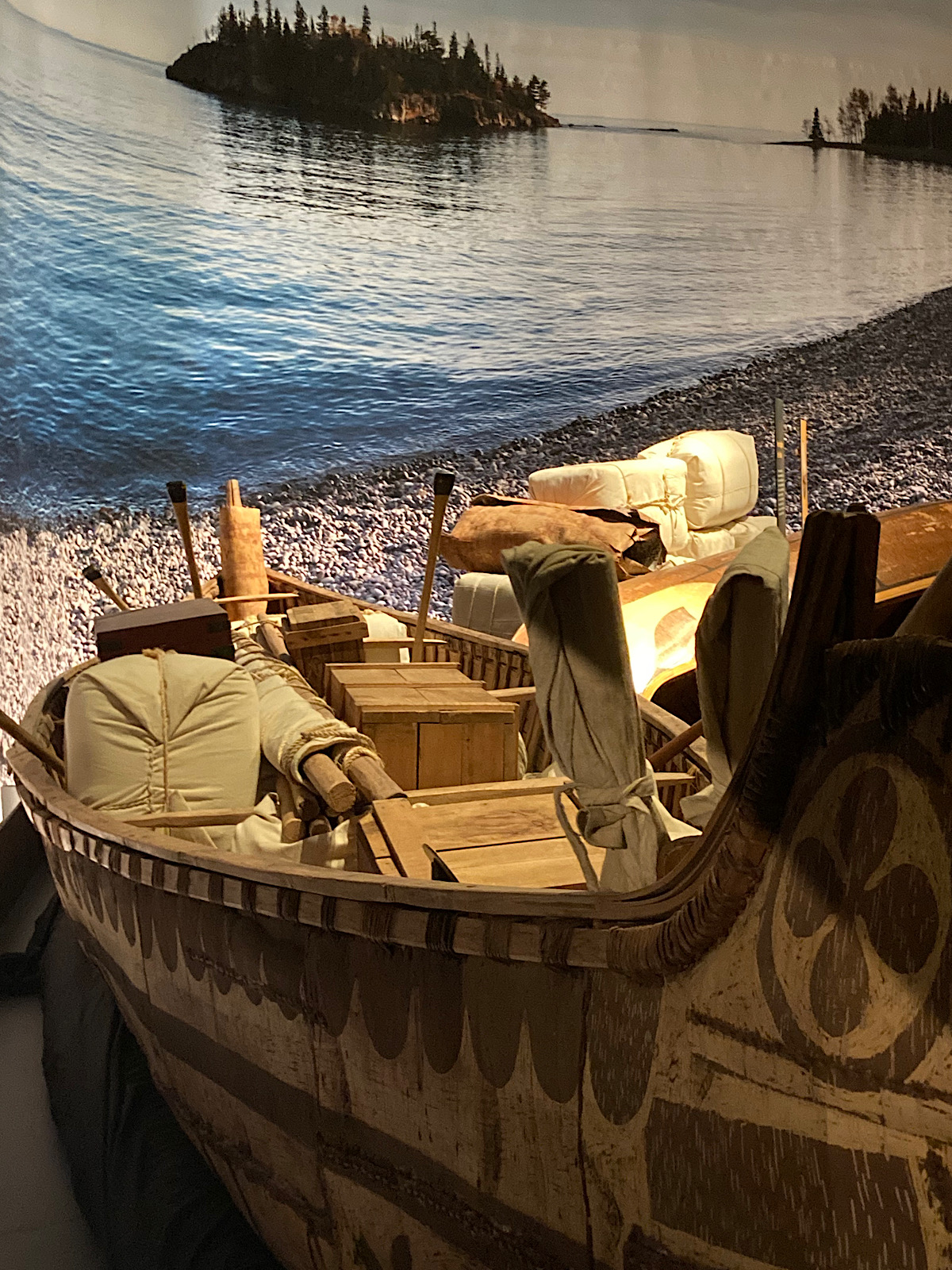
The canoe isn’t just an artifact here.
It’s a bridge between experiences—past and present.
The Deeper Story: Indigenous Knowledge and Living Culture
One of the most important aspects of the museum is its commitment to Indigenous voices and perspectives.
Canoes were not “invented” in a modern sense—they were developed over thousands of years by Indigenous Peoples, shaped by environment, culture, and deep ecological knowledge.
From birchbark canoes of the eastern woodlands
to cedar dugouts of the Pacific Northwest
to skin-on-frame kayaks of the Arctic
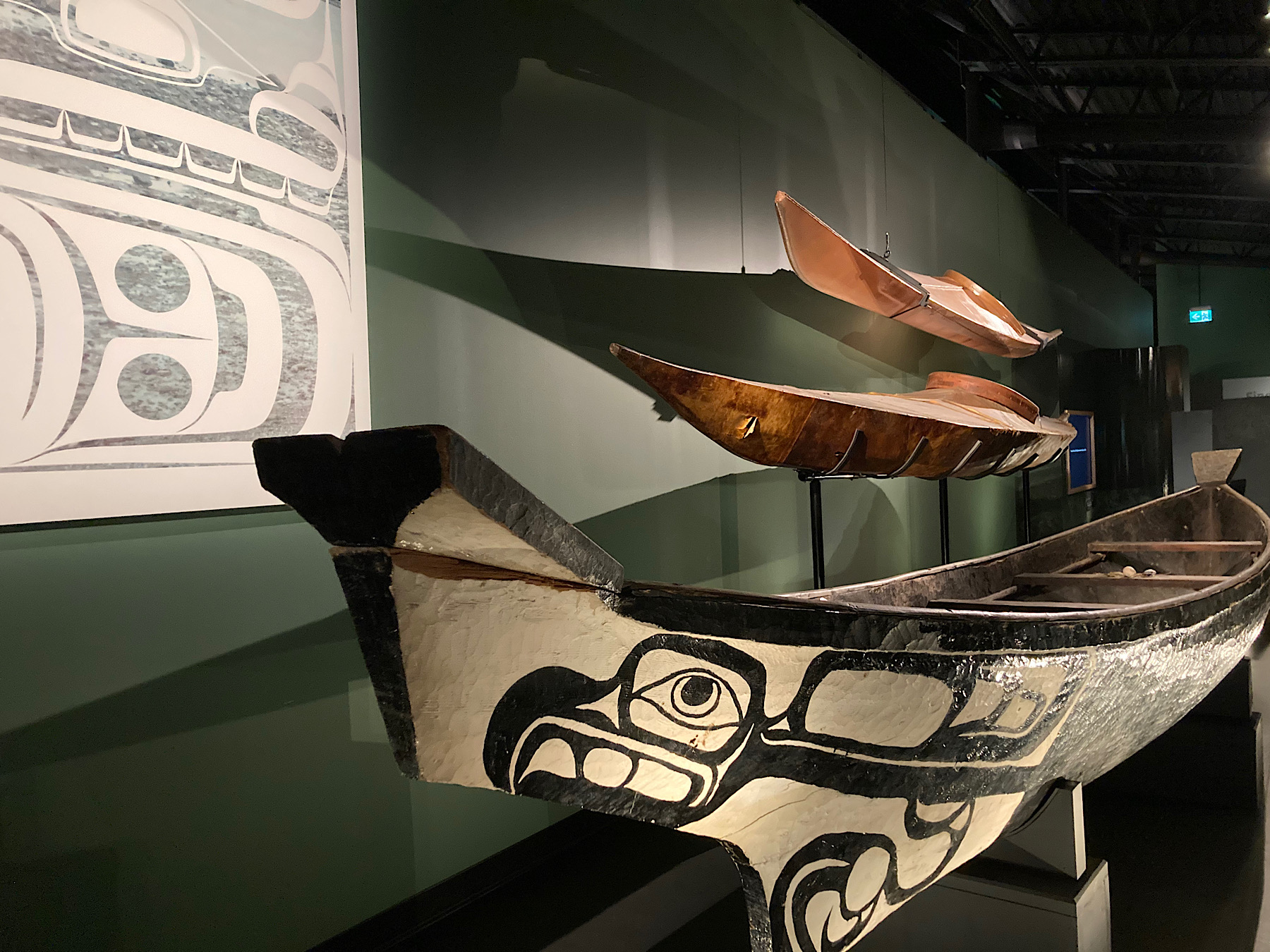
These designs are not just functional—they are cultural expressions.
The museum works in partnership with Indigenous communities to ensure these stories are told with respect, accuracy, and multiple perspectives.
This includes acknowledging difficult histories—colonialism, displacement, and the legacy of museum collecting practices.
It’s not always a comfortable story.
But it’s an essential one.
The Canoe and Canada’s Formation
If there’s one section that anchors the museum firmly in Canadian history, it’s the fur trade.
Before roads and railways, waterways were the highways of this country.
And the canoe made them usable.
Massive freight canoes—some over 12 metres long—carried tons of goods across vast distances. Crews of voyageurs paddled from dawn to dusk, navigating rivers, lakes, and countless portages.
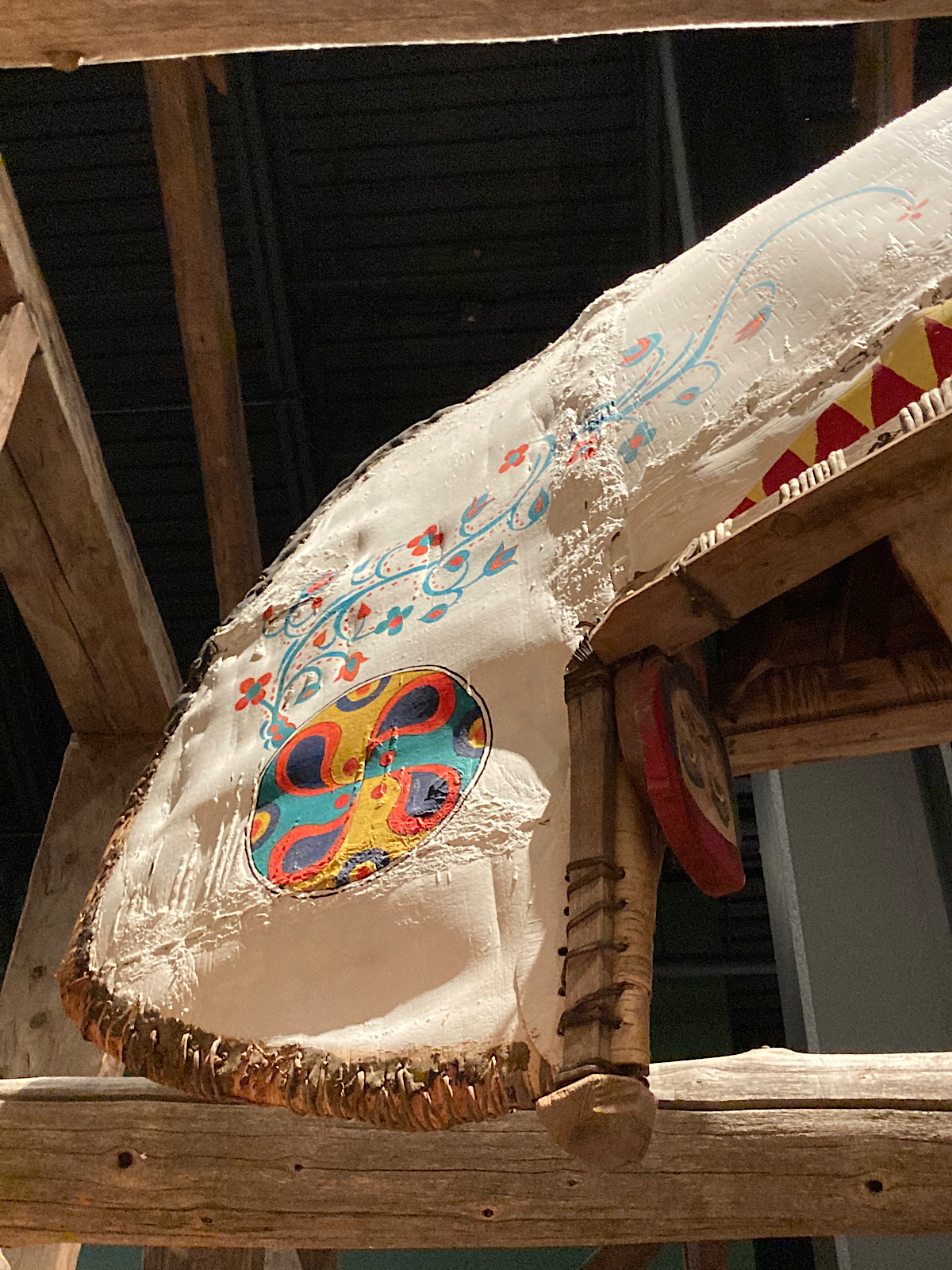
Entire economies depended on it.
The canoe connected trading posts, enabled exploration, and shaped settlement patterns across the country.
It also created complex cultural relationships—between Indigenous communities, European traders, and Métis peoples.
This is where the canoe shifts from tool… to nation-builder.
From Workhorse to Way of Life
As transportation evolved, the canoe’s role changed—but it didn’t disappear.
It adapted.
Recreation, cottage life, summer camps, wilderness travel—all became part of the canoe’s modern identity.
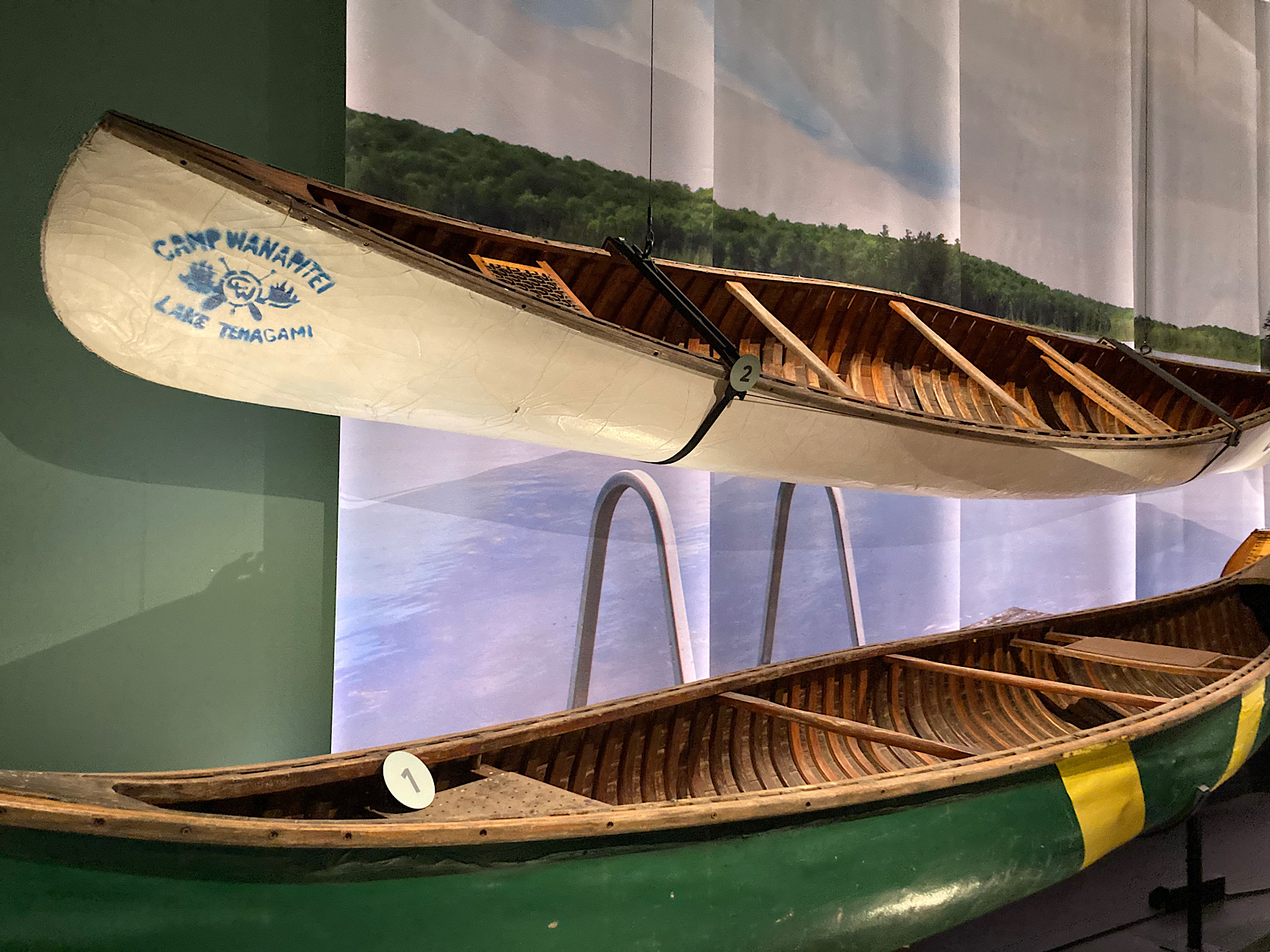
The museum captures this beautifully:
- Camp canoes worn smooth by decades of use
- Racing shells built for speed and competition
- Personal stories of paddlers, adventurers, and families
For many Canadians, the canoe is tied to memory.
Quiet mornings on still water.
Campfire evenings after a long paddle.
The rhythm of paddle strokes echoing across a lake.
It’s no longer just about getting somewhere.
It’s about being there.
10 Tips for First-Time Visitors
If you’re planning your first visit, here are a few ways to make the most of it:
1. Start with a guided tour
A short or deep-dive tour adds context you might otherwise miss.
2. Give yourself at least 2–3 hours
There’s a lot to take in—and it’s worth slowing down.
3. Don’t miss the Collection Hall
Seeing the full scope of the collection is unforgettable.
4. Get on the water
Rent a canoe or join a guided paddle on Little Lake.
5. Explore the outdoor campus
Boardwalks, gathering spaces, and lake views add to the experience.
6. Visit the canoe-building studio
Watching craftsmanship in action adds a whole new layer.
7. Take a break at the café
Lakefront views + a quiet moment = worth it.
8. Pay attention to the architecture
The building itself tells part of the story.
9. Check for special exhibits or events
Rotating exhibits add fresh perspectives.
10. Come curious
This is a place that rewards attention.
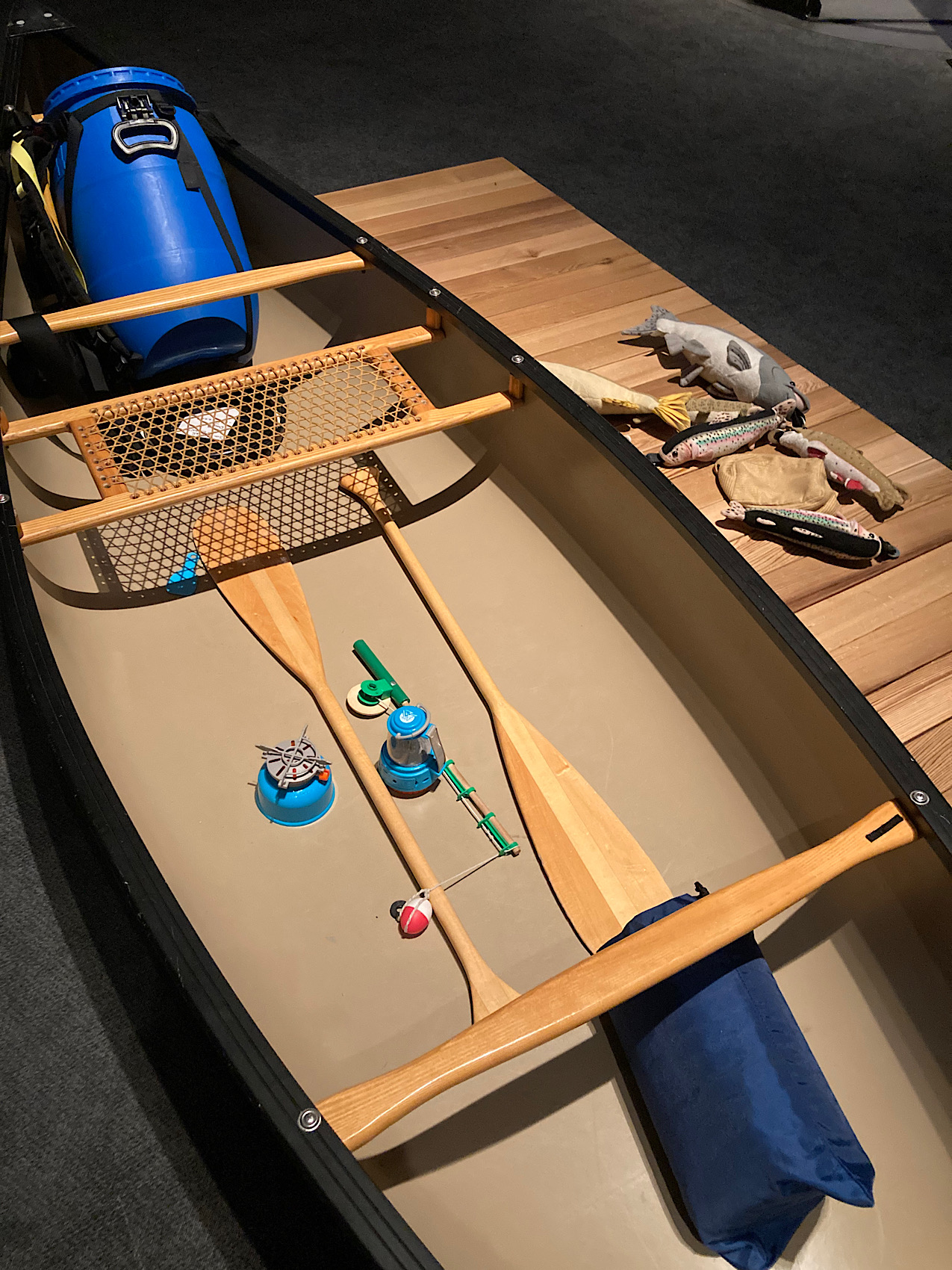
When You Go
- Location: Peterborough, Ontario
- Time needed: 2–3 hours minimum
- Best add-on: Paddle on Little Lake
- Nearby camping: Beavermead Park Campground (easy walking distance)
Final Thoughts: More Than a Museum
When we stepped outside, the shift was immediate.
Inside, everything had been still, preserved and carefully held in place. Out here, the water moves. A canoe slips quietly across the lake, barely leaving a ripple behind.
No exhibit panel. No explanation. Just motion.
And it struck me how thin the line really is between past and present— sometimes, it’s just a shoreline.
Inside, we had seen the canoe as history. Outside, we saw it as something still very much alive.
That’s what makes the Canadian Canoe Museum different.
It doesn’t just preserve the past.
It reminds you that the story is still being written—every time someone picks up a paddle and pushes off from shore.
Continue the Journey
Next Stop → Paddling Peterborough’s Past: Lock to Lock (coming soon)
(Be sure to pin this post for future reference)


Leave a Reply